On this page
Houston decks take full sun, humid air and heavy rain, and the finish on the boards meets all of it first. Stain and paint protect the wood in different ways, so each one looks, wears and gets redone differently. The short answers:
- Deck stain: soaks into the wood fibers, keeps the wood grain visible and fades gradually.
- Deck paint: forms a film on top of the wood, covers the grain and wears by cracking and peeling.
- The deck floor: usually stain, because the boards flex, collect water and take the foot traffic.
- Railings and trim: either finish works, and paint is a common choice for a solid color.
- A deck with an old finish: what’s on the boards now decides more than the can does, because stain can’t soak through paint.
Deck staining vs deck painting, side by side
Deck stain and deck paint both keep water and sun off the wood, and they do it from opposite places: stain works from inside the boards and paint works from the surface.
| Deck stain | Deck paint | |
|---|---|---|
| Where it sits | Soaks into the wood | Sits on top of it |
| The grain | Shows through | Covered |
| Opacity | Clear to solid | Opaque |
| Primer | Not needed | Often needed |
| How it wears | Fades gradually | Cracks and peels |
| A redo | Wash and recoat | Scrape and sand |
| Underfoot | Wood texture | A smooth film |
| Flaws | Shown through | Small ones covered |
| Color options | Wood tones to solid | Nearly any color |
| Moisture | Lets wood breathe | Can trap it |
| Best suited to | The deck floor | Railings and trim |
Stain runs from transparent through semi-transparent to solid, and paint comes in flat, satin and gloss, so for one solid color the choice is usually between a solid stain and a paint. Rise and Prime offers staining a deck or fence in Houston and paints decks as well.
How does deck stain work?
Deck stain works by soaking into the wood instead of covering it. The liquid carries pigment and resin down into the wood fibers, so the deck boards keep their texture and the natural wood grain stays visible through the color. A stain penetrates the surface and leaves no film behind, which is why there’s nothing to crack or peel.
Transparent stain adds almost no color and shows the most natural wood, semi-transparent stains add visible color and still let the grain show, and solid stain is the closest to paint: it hides the grain and most of the wood’s own color while still soaking in.
The pigment is also what blocks ultraviolet light, so a stain with more pigment gives the wood more UV protection. A stained deck fades gradually, and it shows its age as a lighter, uneven color where the sun and the foot traffic reach first.
How does deck paint work?
Deck paint works by forming a film on top of the wood. The coat sits on the surface of the deck boards, covers the grain and gives a solid, even color, and that film keeps water and sun off the wood underneath. Paint on bare wood goes over a primer, the coating that gives it something to grip.
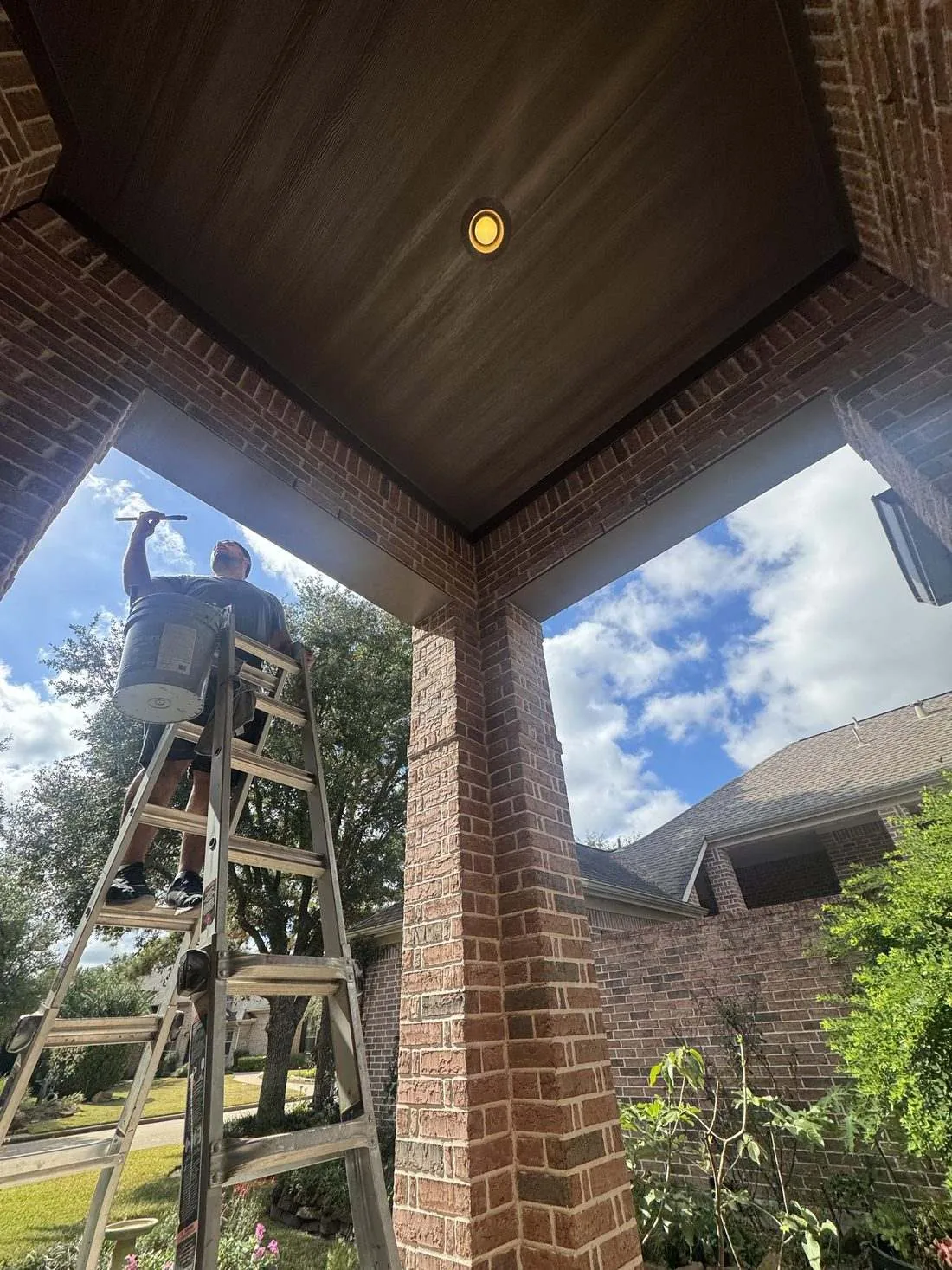
The film is also where paint has its limits on a deck. A film works well on surfaces that stand upright and shed water, which is the job of painting the siding and trim of a house. A deck floor is flat, takes the weight of every step and holds standing water. Boards swell with moisture and shrink as they dry, and the film doesn’t move with them, so it cracks at the edges and around the fasteners first. Once water gets under a crack, paint can trap moisture against the wood and lift from there.
Paint’s strength is color. It comes in far more color options than stain and covers discoloration and minor flaws, though it can’t cover damage. A redo is labor intensive, because a failing film has to be scraped and sanded back before new paint goes on, and that prep work is most of the effort.
Is it cheaper to stain or paint a deck?
Stain and paint don’t have a fixed price difference on a deck, because the cost of either one follows the size of the deck, the condition of the boards and how much prep the current finish needs. A deck with sound wood and a worn stain needs a wash and a recoat. A deck with a peeling film needs scraping, sanding and often a primer first, and that labor adds to the cost.
Railings, stairs and skirting add work on top of the floor. The painting cost calculator gives a ballpark for a deck from its size, the finish and the condition of the boards, and a free estimate is the next step after that.
What decides it on your deck
Whether to paint or stain a deck comes from the deck itself, and these are the things to read off it:
- The boards’ condition: bare, sound wood takes either finish, and gray, dry boards soak up stain readily.
- The kind of wood: cedar and redwood have a grain worth showing, which favors stain, and pressure-treated pine takes stain well once the boards are dry.
- What’s on them now: stain over stain is straightforward, paint over paint works when the film is sound, and stain can’t go over paint at all.
- Floor or railings: the floor is flat and takes the water, the sun and the foot traffic, which favors stain. Railings shed water and get touched less, so either finish suits them.
- Sun or shade: full sun fades and dries out a finish, and shade holds moisture and mildew.
- The look you want: stain keeps the natural grain and runs from near clear to solid, and paint gives one even, solid color.
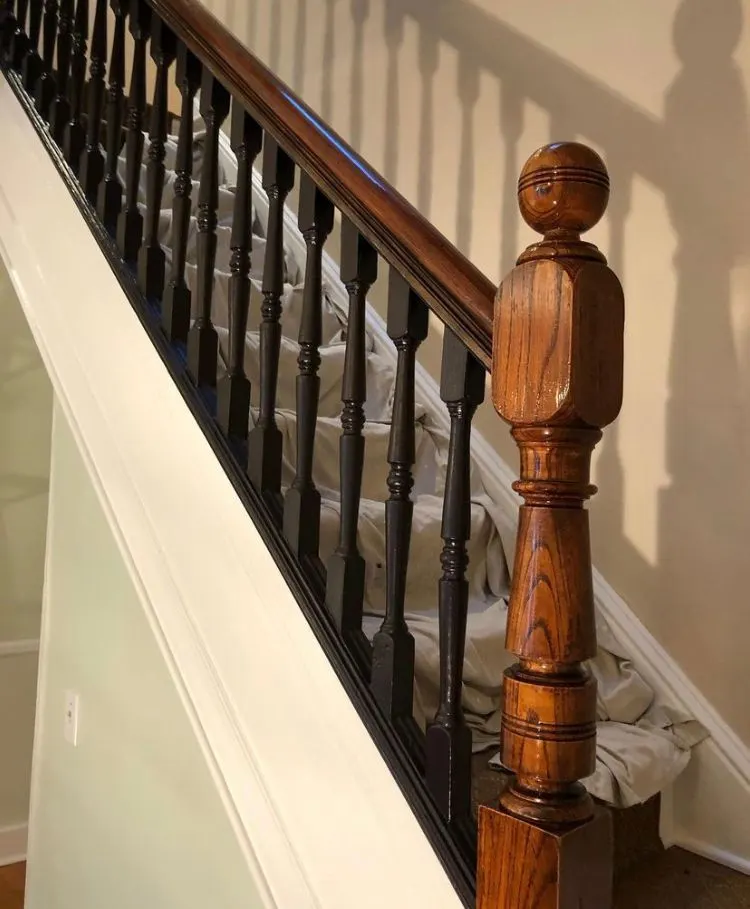
A railing is where the two finishes meet most often: stain keeps the wood grain on the top rail, and paint gives the balusters a solid color. Indoors the same pairing is common on stair rails, which are part of painting stair rails and trim.
Choose stain if
- You want the natural wood grain to show
- The boards are bare, gray or already stained
- It’s the deck floor
- The deck gets full sun
- You want a redo to start with a wash
Choose paint if
- You want one solid color
- The deck is already painted and the film is sound
- It’s a railing, post or trim
- You want to cover discolored boards
- You’re ready to scrape and sand a failing film
Humidity and sun matter to both finishes, and paint and stain choices for Houston humidity covers how the climate treats exterior coatings.
Can you put stain or paint over an old deck finish?
Whether stain or paint can go over an old deck finish depends on the finish already there: stain goes on bare wood or over worn stain, and paint goes over a sound film, with any peeling film scraped off first, or over a stain that has been cleaned and primed.
A painted deck has a continuous film on top of the boards that covers the grain and chips or peels in sheets with a visible edge where it fails. Stained wood shows the grain through the color and fades unevenly where the sun and the foot traffic hit. A few drops of water show where a finish has worn through: on bare or worn wood they soak in and darken it, and on a sound finish they bead up.
Stain can’t soak through paint.
Stain has to penetrate the wood fibers to do its job, and a film of paint blocks them, so stain put over paint sits on the surface and peels with it. People ask whether a painted deck can go back to stain. It can, once the paint is stripped to bare wood, and that stripping is labor intensive work.
Which lasts longer on a deck, stain or paint?
Neither deck stain nor deck paint has a fixed lifespan, because how long either one lasts depends on the wood, the sun, the water and the prep under it. What differs is how each one gives out. Stain fades gradually and is usually refreshed with a wash and a recoat. Paint holds its color until the film fails, and then it cracks and peels.
How it wears
Stain fades. Paint peels.
What wears it
Sun, water and foot traffic.
What a redo takes
Wash, or scrape first.
What it needs first
Clean, dry boards.
Paint tends to last longer on a railing than on the deck floor. A railing sheds water and carries no foot traffic, so a film has an easier time on it.
Getting a deck ready for either finish
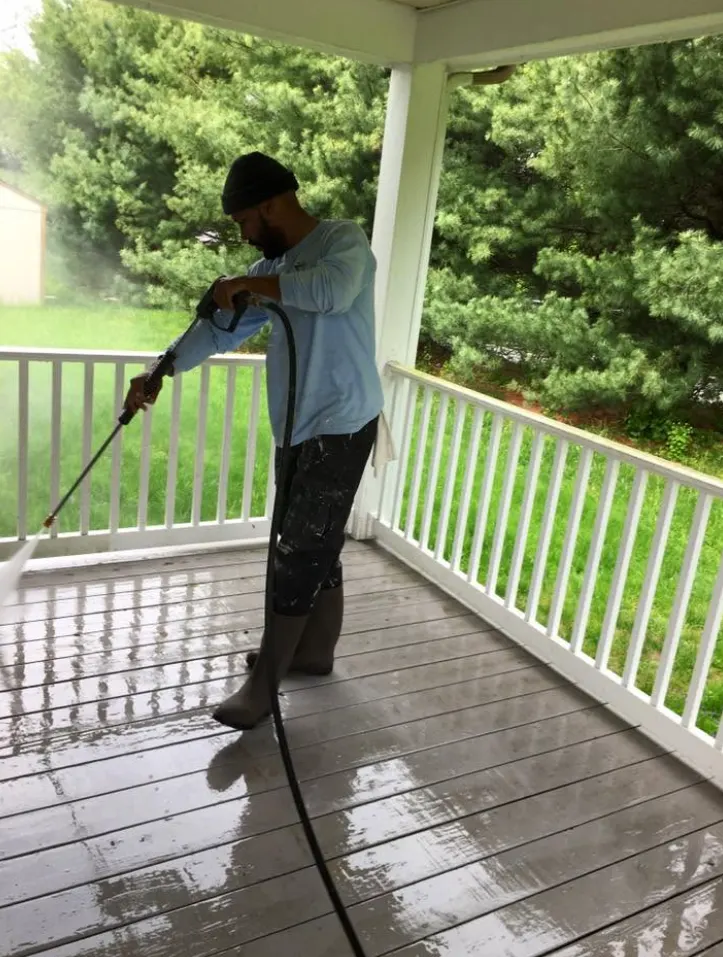
Either finish goes on clean, dry wood, so preparation matters more to the result than the choice between them does. Dirt, mildew and loose, flaking finish come off first, and the boards are left to dry all the way through. Soft or rotted boards are dealt with before any finish goes on, because a finish covers wood and doesn’t repair it.
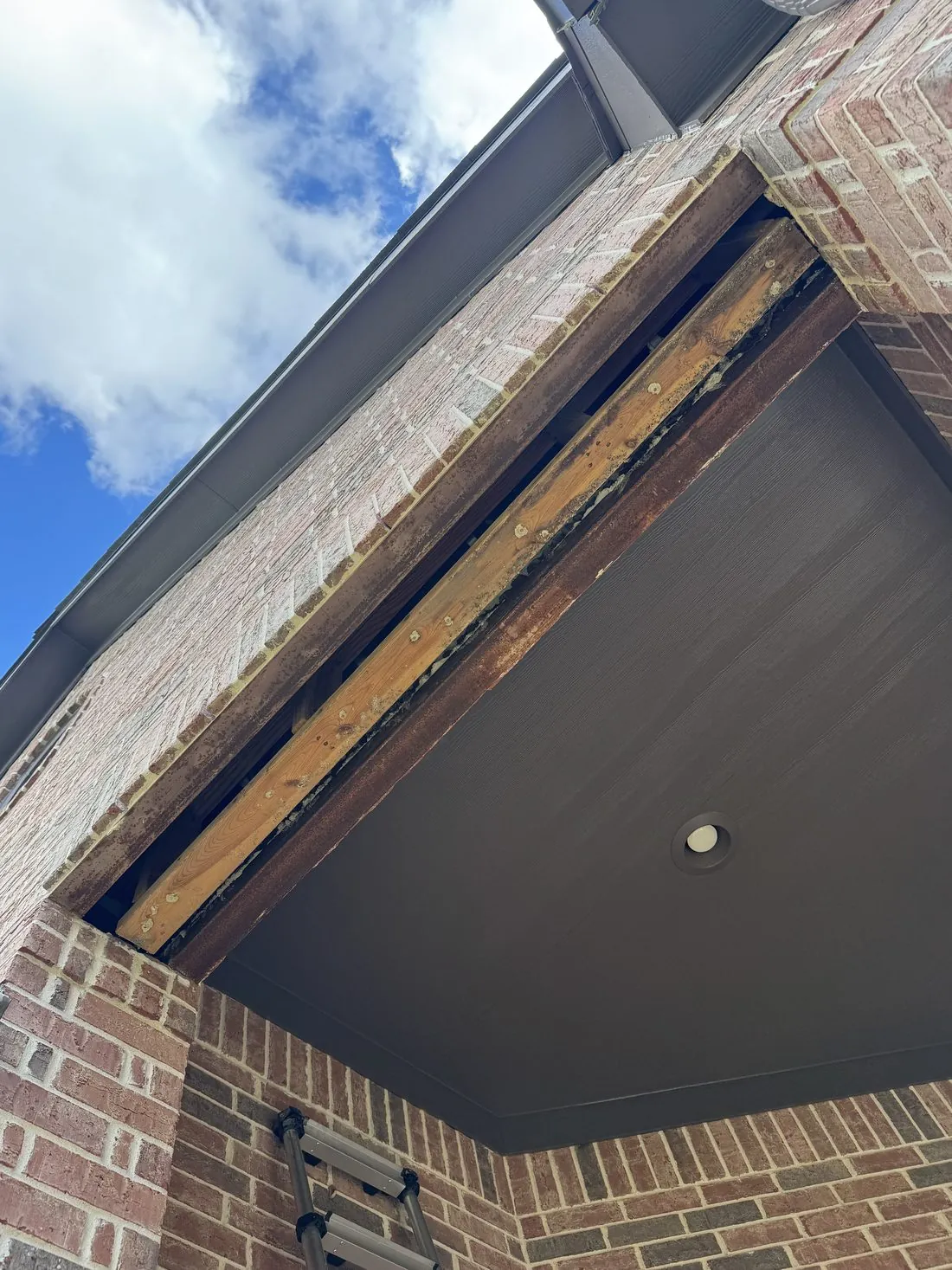
Washing the boards before a new finish takes a light hand, because too much pressure raises the grain and furs the wood. Furniture, grills and planters come off the deck first, and getting the outside ready lists what to clear.
A free estimate is how Rise and Prime puts a number on either finish: call or text (443) 743-8052, in English or Spanish.