On this page
The best exterior paint for humid climates is a premium acrylic latex with a mildew-resistant coating, matched to the surface it covers. In Sherwin-Williams terms that means Duration or SuperPaint on wood siding and trim, a Loxon primer under the topcoat on brick and stucco, and a VinylSafe color on vinyl siding.
Humid weather ruins exterior paint in predictable ways. Moisture gets behind the film and lifts it into blisters, mildew grows across the surface, and hot sun breaks down the binder until the color chalks and fades. A moisture-tolerant premium product slows all three, provided it goes onto a sound, dry surface on a day the weather allows, so prep and the weather on painting day decide as much about the paint job as the can does. A coastal home on the Gulf asks far more of its exterior paint than a home in a dry climate does, and the difference shows first on the surfaces that stay damp.
What is the best exterior paint for hot and humid weather?
The best exterior paint for hot and humid weather is a premium acrylic latex with a mildew-resistant coating, chosen for the surface it covers and the sun it faces. Acrylic stays flexible as siding and trim swell and shrink with heat and moisture, and that flexibility is most of what keeps a coat from cracking.
Rise and Prime works with Sherwin-Williams coating systems, so those are the lines named here. Duration is built to sit outside in sun and humidity: its data sheet lists it as self-priming on most surfaces, with a mildew-resistant coating, for application down to 35°F. SuperPaint does the same job for less on the right surface, and Loxon is made for masonry and stucco. Benjamin Moore’s Aura Exterior is the other premium line you’ll see recommended, and its maker lists Color Lock for fade resistance, a mildew-resistant coating and application down to 35°F.
The brand matters less than the match: the right paint for one surface can be the wrong one two walls over. Premium exterior paints cost more because the resin carries more UV protection, built to hold color and keep the film whole for longer in hot sun and humid air, but the same can that lasts on primed wood siding can fail early on fresh stucco, which is alkaline, or on vinyl painted a dark color that heats the siding beyond what it tolerates.
| Surface | Matched to | Check first |
|---|---|---|
| Brick and stucco | Loxon primer under the topcoat | Masonry pH, and new masonry at least 7 days old |
| Wood siding and trim | Duration or SuperPaint | Soft or rotted wood replaced |
| Vinyl siding | A VinylSafe color | Dark shades only from that range |
| Decks and fences | WoodScapes stain | Clean, dry wood, and stain versus paint on a deck floor |
Loxon’s data sheet accepts masonry between pH 6 and 13 once it’s at least 7 days old, and the Duration data sheet says any surface above pH 9 needs a high-pH primer such as Loxon before the topcoat goes on. Mildew resistance protects the paint film itself. Moisture resistance depends on that film staying unbroken, which takes a flexible coating over sound prep and sealed joints.
Which parts of a house does humidity damage?
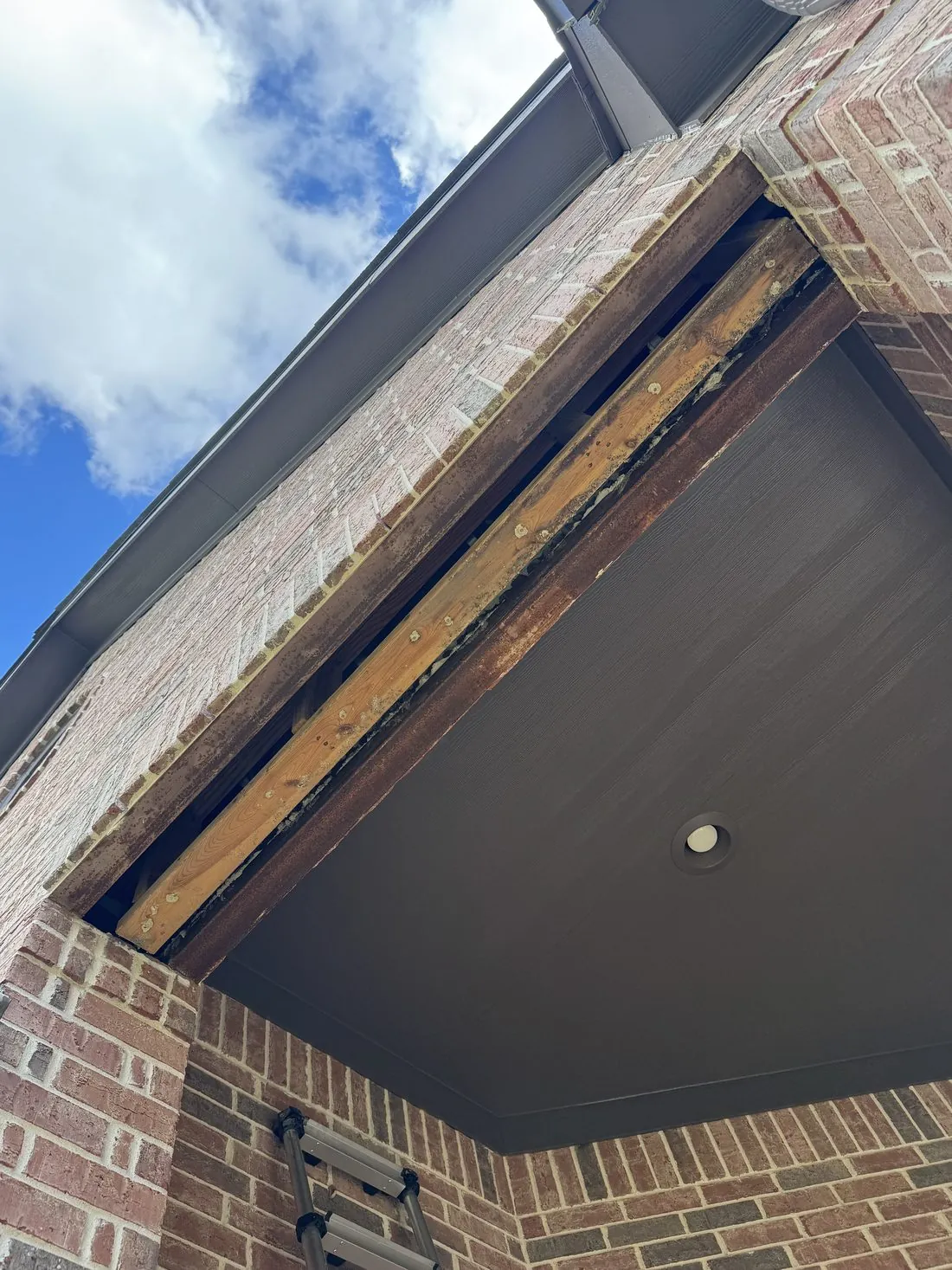
In a humid climate, humidity damages the parts of a house that hold water or never fully dry: fascia and soffit boards at the eave, porch and patio ceilings, the bottom edges of wood siding and trim, and any caulk joint that has opened up. Shade keeps them damp long after the rest of the wall has dried, and mold and mildew grow where a surface stays wet.
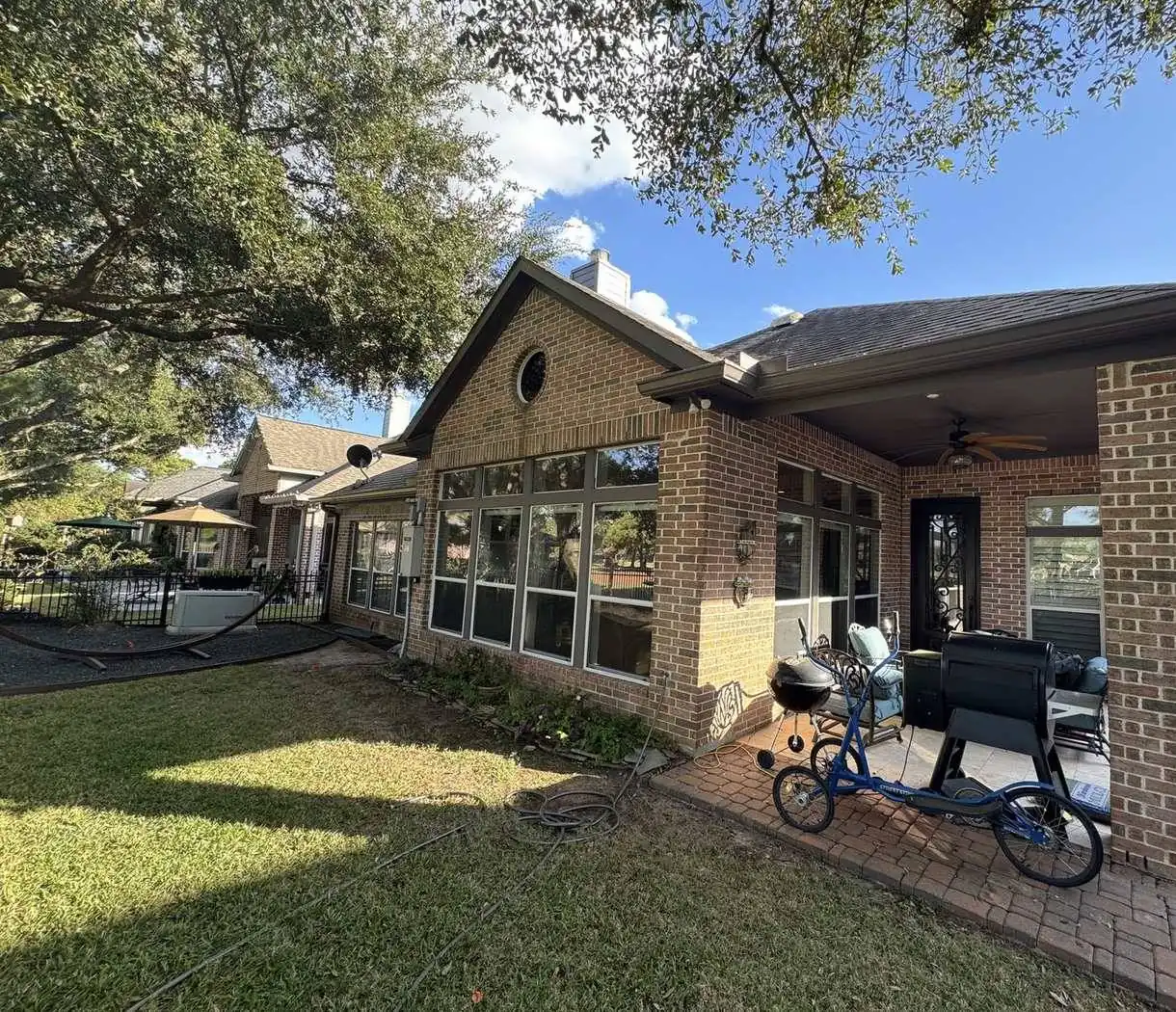
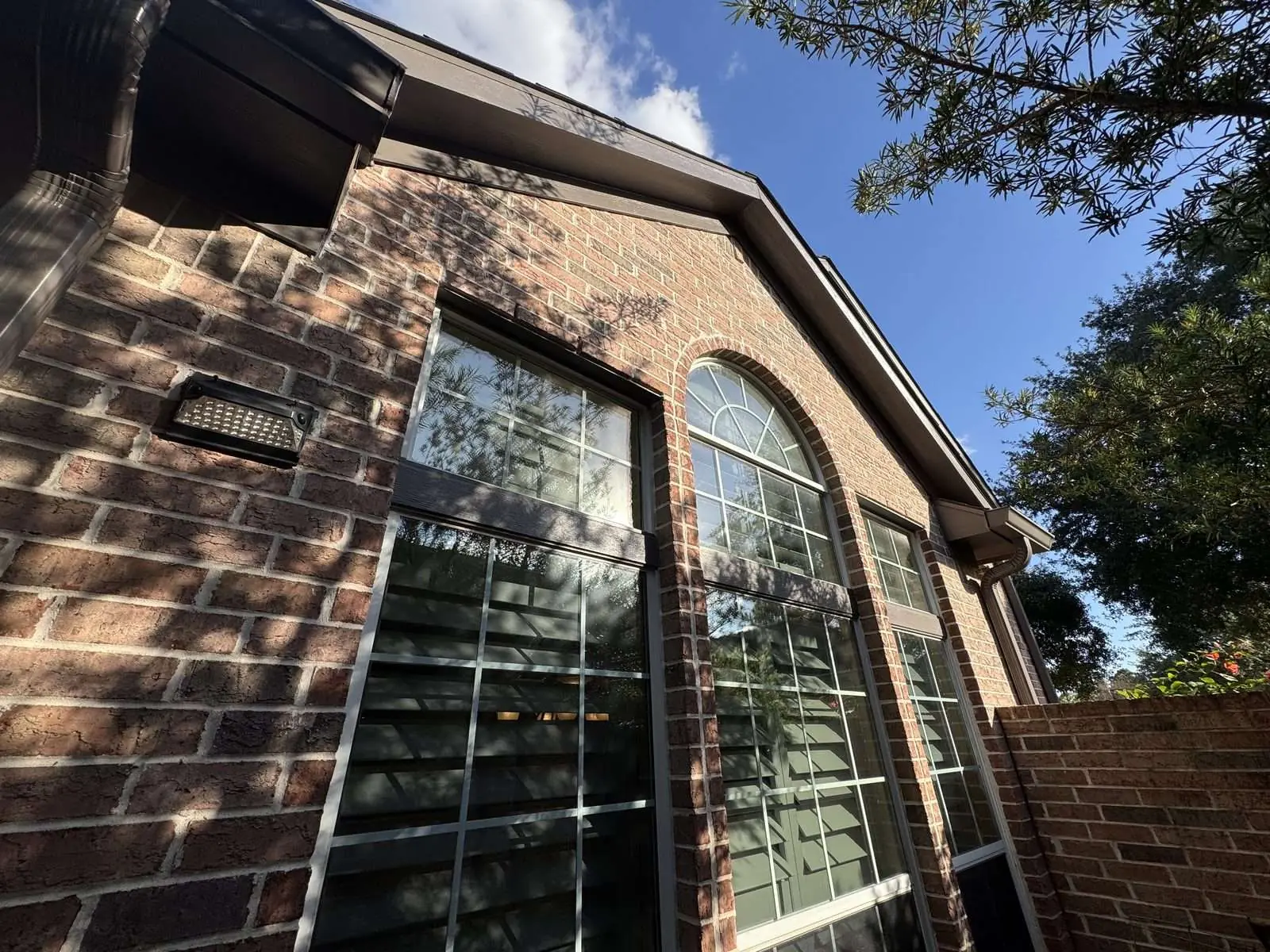
Wood is where humidity does the most damage. Once water gets behind the paint on a fascia board, the wood swells, the film lets go, and the board softens from the inside out. Paint over soft wood skips the prep, hides the problem for a while and then peels with it. On the house in these photos, the rotted board came off before any paint went on. Brick and stucco fail differently. Masonry surfaces are alkaline and they breathe, so they need a primer built for high pH and a coating that lets moisture move out of the wall, which is the job the Loxon line is made for.
“…a fair amount of wood replacement and repair to our cedar sided house. They were careful to get matching material…” Andrew Lundberg, Google review
Can you paint outside when the humidity is high?
Exterior paint can go on when the humidity is high, as long as the surface is dry and warm enough. The number that decides it is the dew point, the temperature at which moisture condenses out of the air and onto a wall. The Sherwin-Williams data sheet for Duration asks for the air, the surface and the paint itself to be at least 5 degrees above the dew point, and it warns against painting in direct sun.
Humid climates keep that margin tight. NOAA’s climate normals for Houston put the average relative humidity at 90% at 6 a.m., climbing to 93% in July and 94% in August, with a mean July dew point of 74.5°F. On a summer morning a wall can be wet with dew without a drop of rain, and a wall in shade can stay damp well into the day.
5 degrees above the dew point
For the air, the surface and the paint, per the Duration data sheet.
Out of direct sun
The same data sheet warns against painting in it.
Quick to set above 80°F
In heat, Duration sets up fast, so the shaded side goes first.
4 hours before a recoat
At 45°F and warmer and 50% humidity. Damper air slows it down.
Water on paint that hasn’t cured causes a failure of its own. Sherwin-Williams names moisture as the number one cause of surfactant leaching, the streaks that appear when dew, rain or fog reaches latex paint before it has cured. On a humid day the safe window opens once the morning dew has dried, and it closes early enough for the paint to set before the evening dew comes back.
Can you paint an exterior in 100 degree heat?
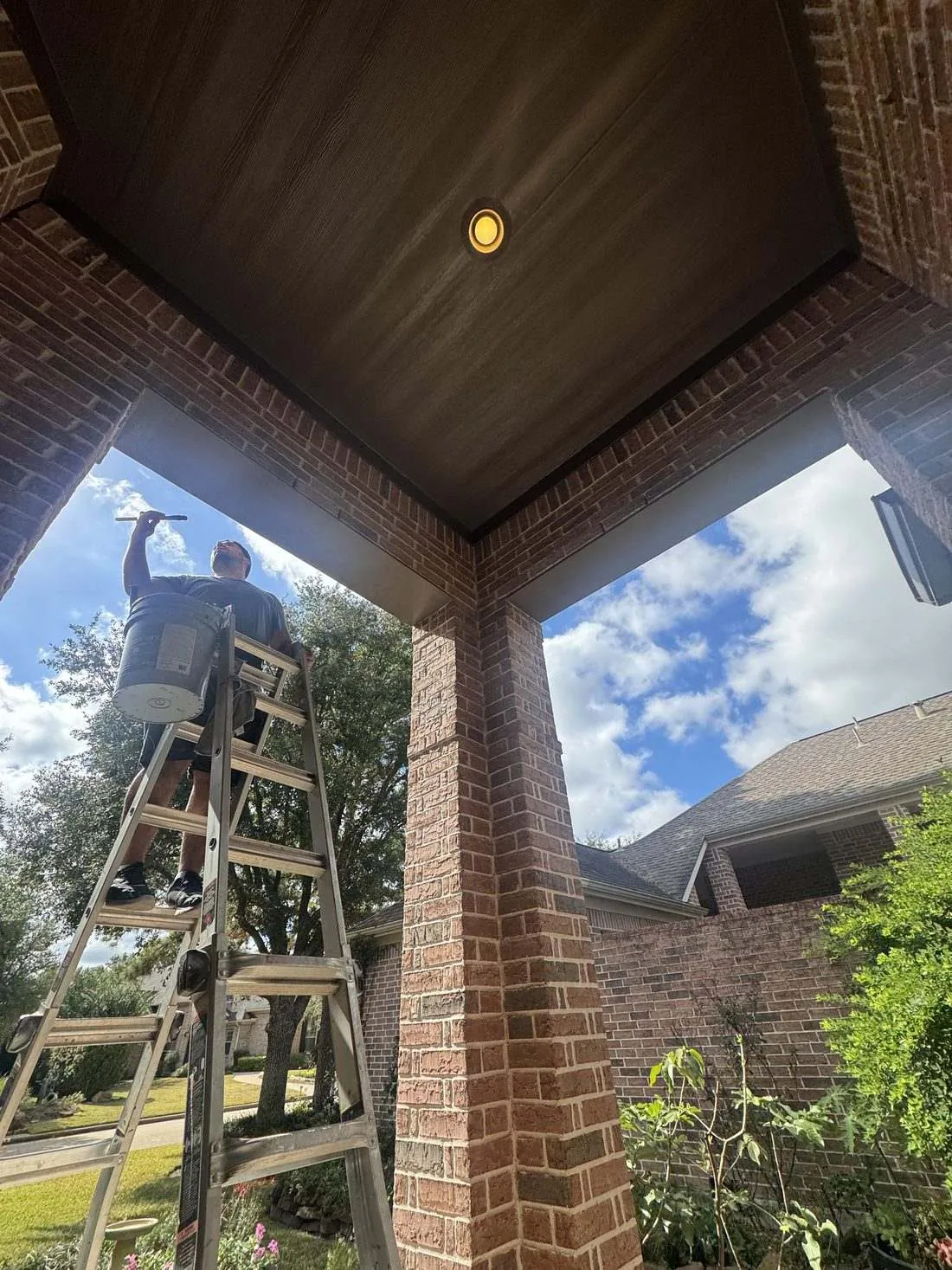
Painting an exterior in 100 degree heat can be done, although the paint dries faster than it can be worked. NOAA counts 111 days a year at 90°F or hotter in Houston, and the Duration data sheet notes that above 80°F the coating sets up quickly. Fast drying leaves lap marks where fresh paint meets paint that has already started to set, and a wall in full sun can be far hotter than the air around it.
Paint the side of the home the sun has already left, keep a wet edge, and stop when a wall feels hot to the touch. In hot, humid climates, early starts help with the heat and work against you with the dew, so the dew point and the thermometer both have to agree before a brush goes on.
Which sheen holds up best in humid weather?
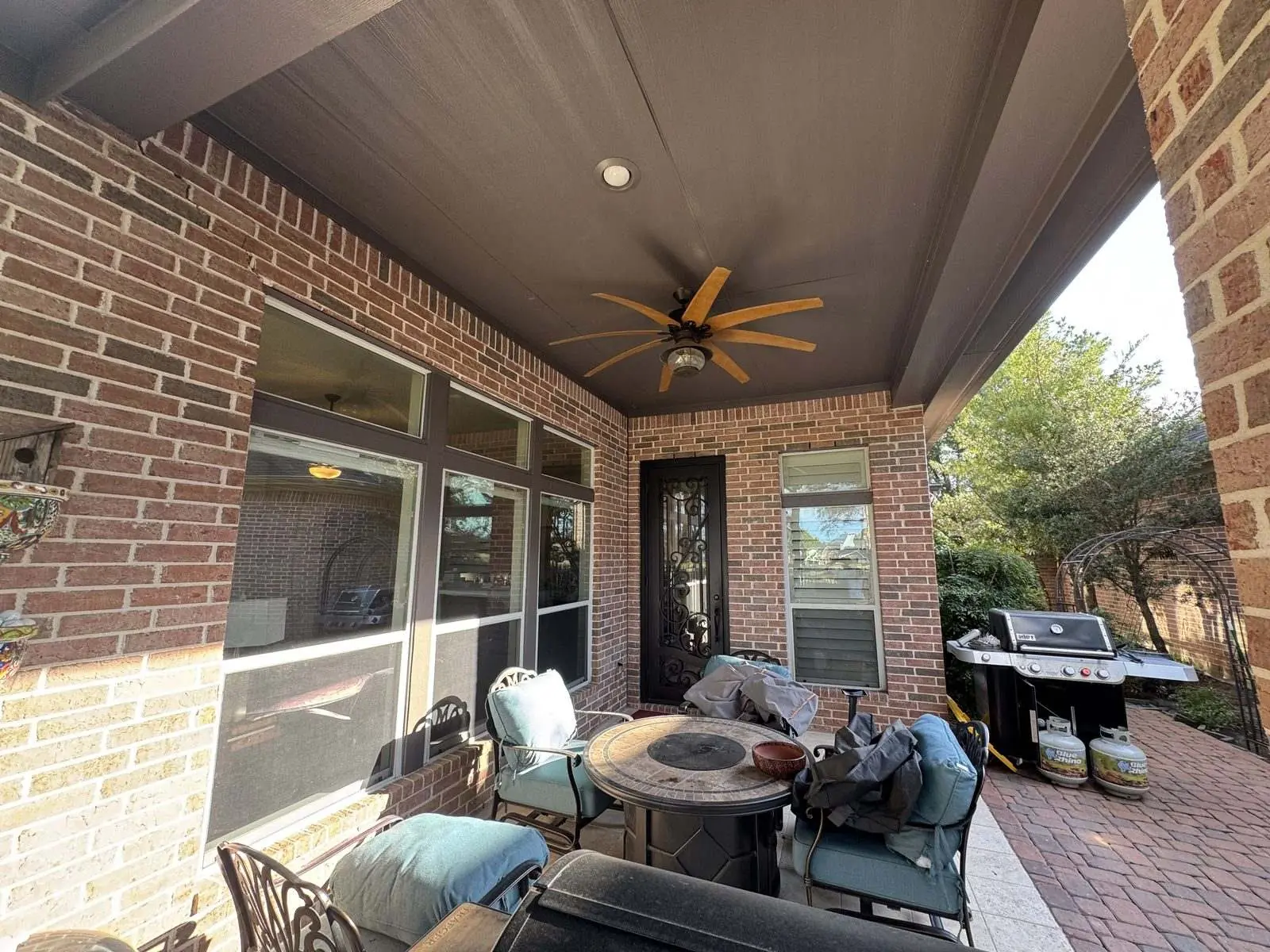
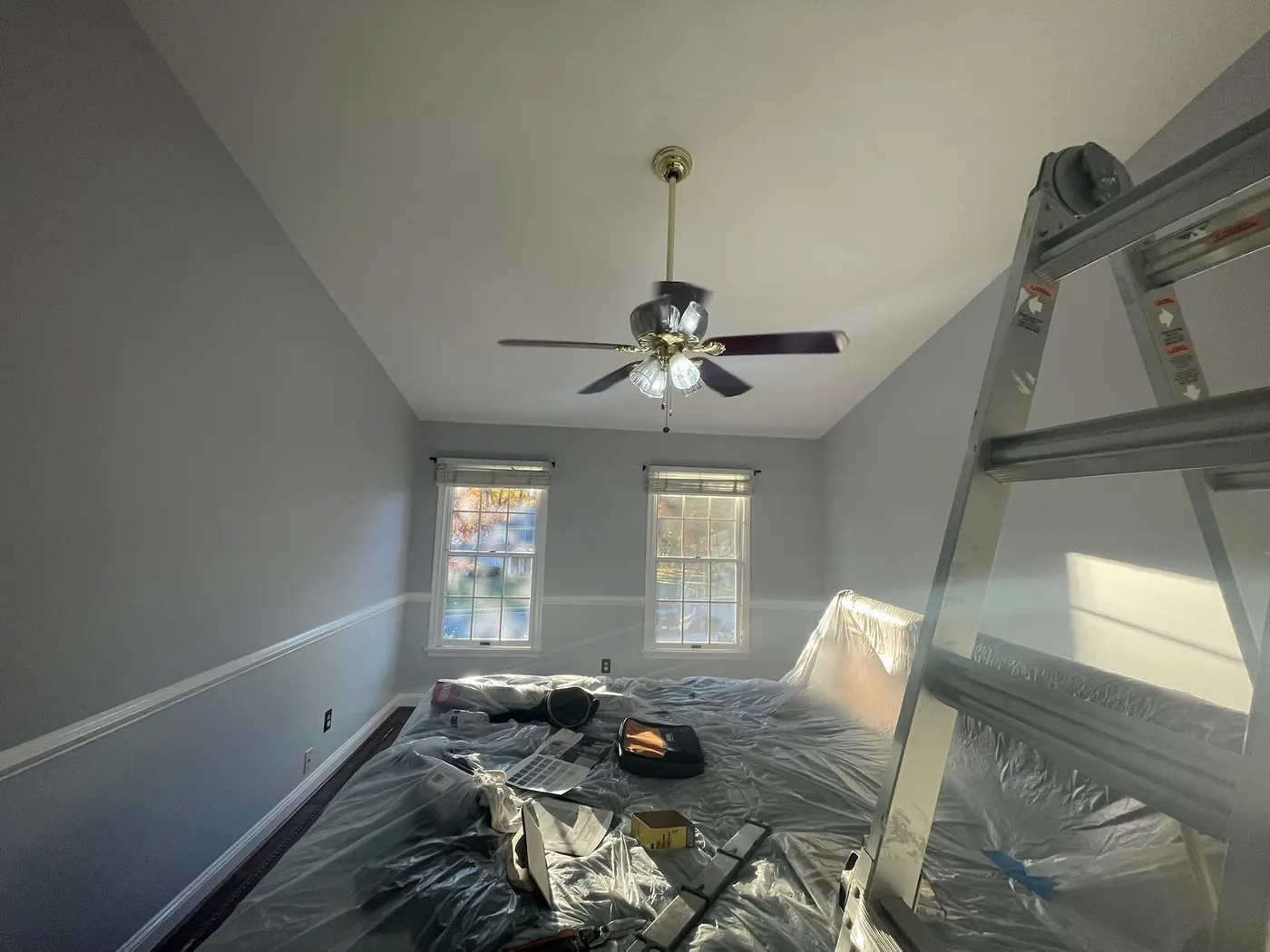
A satin or semi-gloss sheen holds up best on the surfaces of a home that get dirty or damp: trim, doors, window frames and porch ceilings. Higher sheens leave a tighter surface with more stain resistance, easier to clean than a flat finish, which counts for a lot where mildew and pollen collect. Porch and patio ceilings stay shaded and damp, so they take an exterior paint with a mildew-resistant coating in one of those higher sheens. Flat and low-sheen finishes hide dents and uneven siding better, so they suit broad wall areas, provided the product carries a mildew-resistant coating. Inside the house the trade-offs shift, and the best paint finish for walls is a separate decision.
Color matters on vinyl siding in particular. Dark paint absorbs heat and vinyl can warp when it gets too hot, so Sherwin-Williams publishes a set of VinylSafe colors, including darker shades formulated to resist warping and buckling, for use with Duration, SuperPaint and Emerald.
The prep that decides whether it lasts
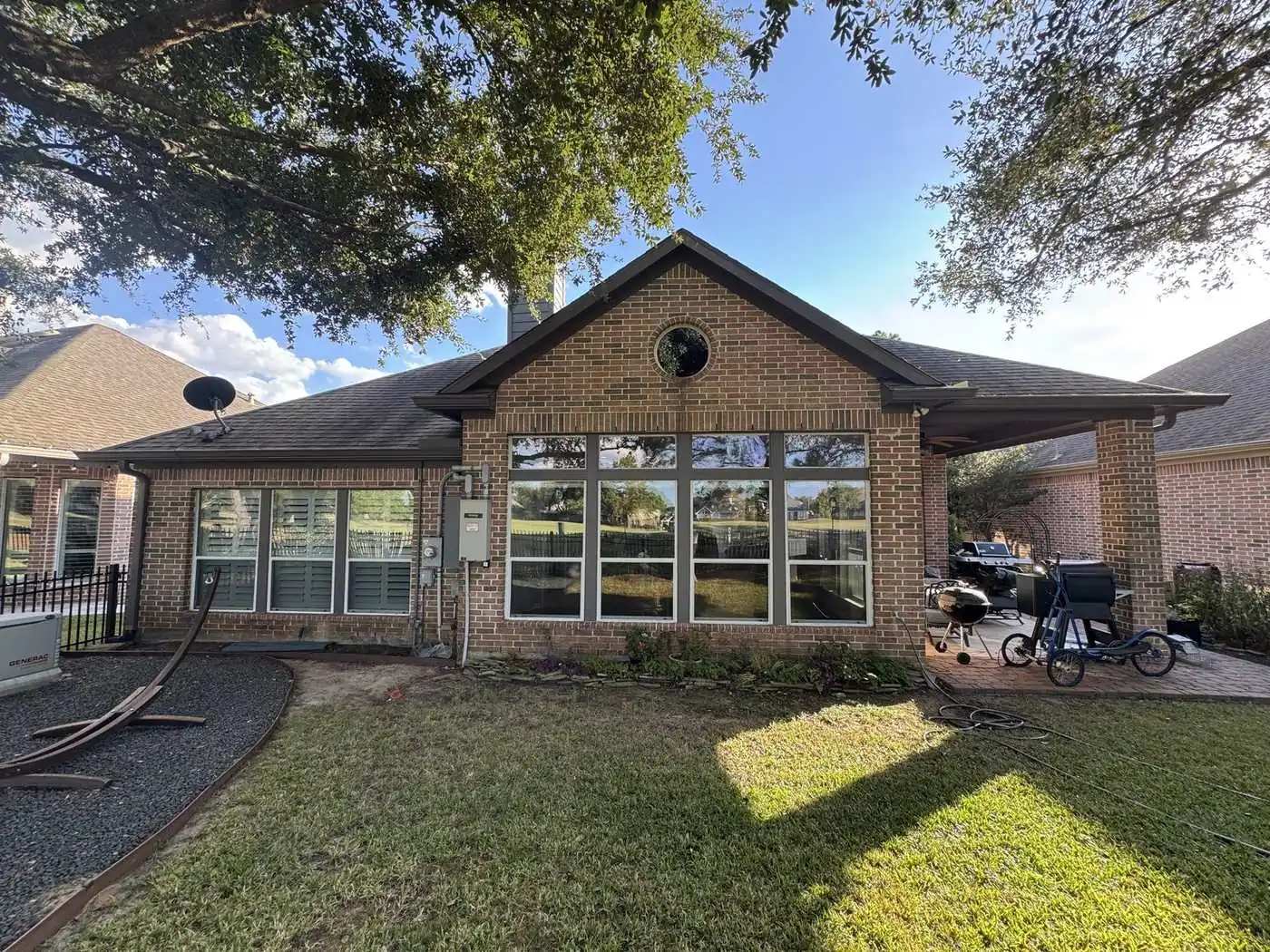
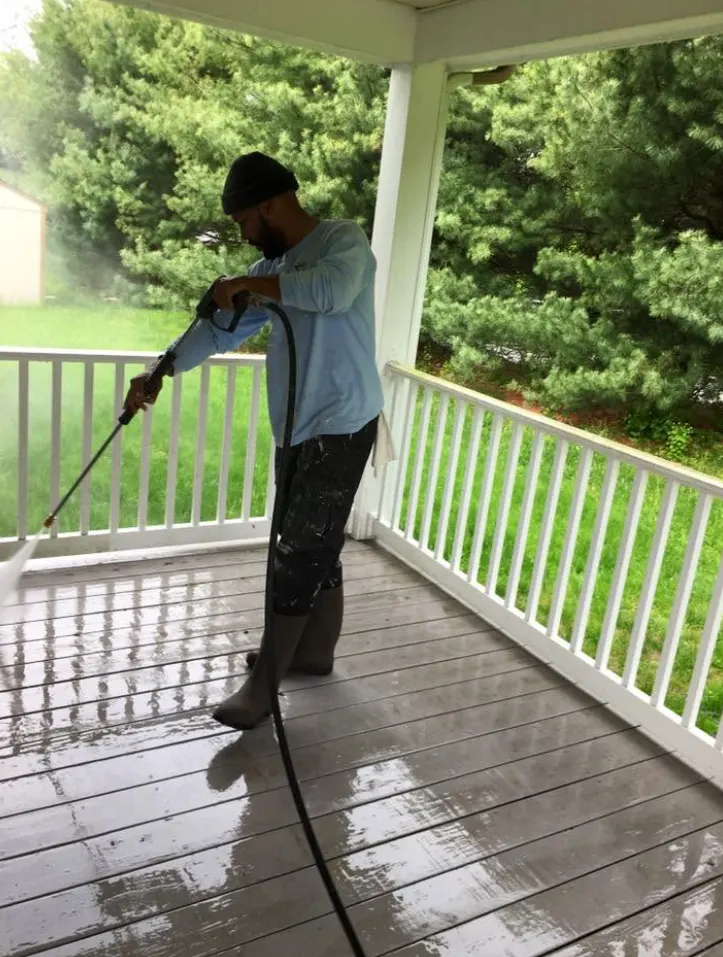
On the job, most repaints start with pressure washing or another cleaning method the surface can take. Dirt, chalky old paint and mildew all stop new paint from bonding, and a wall that looks clean from the street can still carry enough of all three to cause trouble. A home exterior in a humid climate needs its own prep per surface, and the surfaces that hold moisture need the most. We also offer pressure washing in Houston as its own service, for homeowners who want a house cleaned without a repaint.
- Wash off dirt, chalk and mildew, then let the surface dry.
- Scrape and sand peeling or blistered paint back to an edge that holds.
- Replace soft or rotted wood, since paint won’t hold on it.
- Caulk open joints around trim and windows, so water can’t get behind the paint.
- Prime bare wood and repairs, and prime masonry with a primer made for its pH.
Wash it, fix the wood, prime what’s bare, then paint a dry wall.
If you’d prefer it done for you, our exterior house painting in Houston covers the washing, the wood repair and the coating system for each surface of your home. For a rough number on an exterior painting project, the painting cost calculator gives a ballpark. Most exterior repaints start around $3,500, and the written price depends on the size of the house, its condition and any repairs found at the walkthrough.