
Epoxy garage floor coating in Houston.
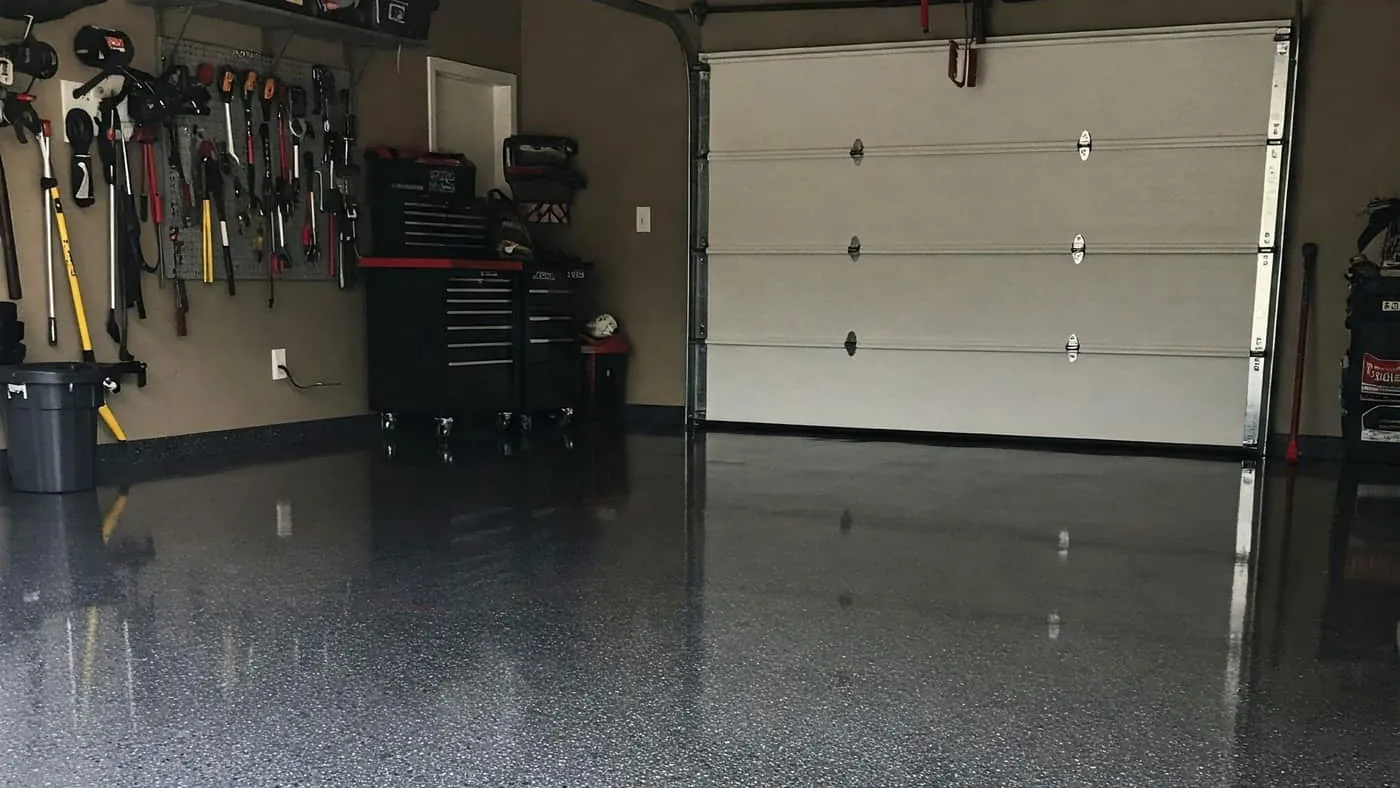
Ground, filled, primed and coated, in that order. What decides whether a garage floor holds up happens before any color goes down.
Two epoxy quotes can look the same and hold up completely differently.
An epoxy garage floor in Houston is a coating system bonded to a diamond ground slab, usually a primer, a colored base coat with flake broadcast into it and a clear topcoat over the top, and it starts around $7 per square foot.
Rise and Prime Painting coats garage floors across Houston and the north side, in Tomball, Spring, The Woodlands, Conroe and Humble. Ray Gomez owns the company, he's an epoxy certified installer, and he looks at the slab himself before there's a price on it.
Epoxy flooring quotes in this city can look close on paper for very different jobs. A floor that was acid etched instead of ground, or coated over a slab that's pushing moisture up through it, will look identical on the day it's finished and fail far sooner.
- Epoxy certified installer
- Diamond ground, never acid etched
- Written price before anything starts
Tell Ray about your garage.
Tell him whether anything is already on the floor. He'll come out, look at the slab, and put the price in writing.
- 122 Google reviews, 5.0 average
- Epoxy certified installer
- Fully insured
Four layers, and the one underneath decides the rest.
The roll-on kits sold in a box are one layer. A floor that holds up to a car is four, and the layer count is most of what separates one quote from another. Here's the stack, bottom to top.
The slab
Diamond ground to open the surface, then cracks and pitting filled and ground back flush. It's the step a weekend kit skips, and everything above depends on it.
Primer
Keys into the ground profile. On a Houston slab that's showing moisture, this is where a moisture-tolerant product goes.
Base coat and flake
The color. Flake gets broadcast into it while it's wet, until the floor stops taking any more, then scraped back once cured.
Clear topcoat
The wear layer, what you're walking and parking on. A polyaspartic topcoat is what handles hot tires and UV.
What you are choosing between.
Three finish systems, the two slab conditions every one of them depends on, and what changes on a bigger floor.
Flake system, the practical pick
Color chip broadcast into the base coat, then sealed.
Flake is the practical pick for a Houston garage, and there's a reason beyond how it looks. The chip gives the floor texture, so it isn't slick when a wet car comes in off the driveway, and it hides the small imperfections every slab has. It gets broadcast into a wet base coat until the floor rejects any more, then it's scraped back and sealed. Full flake costs more than a partial broadcast, and it's the version that looks deliberate instead of speckled.
Solid color
One color, no chip. Cleanest look, least forgiving.
A solid coat is the simplest system, and the one that shows the most. Every dip, every trowel mark and every patch in the slab is still there underneath, and a single flat color draws your eye straight to all of them. It's the right call on a newer slab in good condition, or in a workshop where you want to see what you've dropped. On an older Houston garage floor, flake earns its extra cost back by hiding exactly what a solid color would show.
Polyaspartic topcoat
The wear layer, the part underfoot.
Epoxy is the bond and the body; the topcoat is what takes the abuse. A polyaspartic topcoat holds up better to UV and to hot tires than epoxy alone, which matters in a Houston garage where the door is open and the sun comes in most of the year. Hot tire pickup, where a coating lifts off in patches under a warm tire, is the classic failure on a cheap garage floor and it's mostly a topcoat and a bonding question.
What happens to the slab first
Grinding, not acid etching. This is where jobs are won or lost.
A coating bonds to a profiled surface, and a troweled slab is polished smooth. Diamond grinding opens the surface so the primer has something mechanical to key into, and it takes off whatever sealer, paint or oil is already there. Acid etching is the cheap shortcut, and etched floors are the ones that tend to peel in sheets. Cracks and pitting get filled after the grind, when you can finally see all of them.
Moisture in a Houston slab
Slab-on-grade plus this water table is a real risk, not a formality.
Houston is mostly slab-on-grade over clay that holds water, and a slab without a good vapor barrier under it moves moisture up through the concrete continuously. Put a non-breathable coating over that and the vapor pushes it back off from underneath. That's why the slab gets looked at before anything is promised. Some floors need a moisture-tolerant primer, and some need the conversation before the quote.
Workshops, gyms and larger floors
Same systems, different scale and a different schedule.
A home gym, a workshop, a patio or a pool surround takes the same floor coatings with different priorities: slip resistance goes up, and how it looks in daylight starts to matter more than it does in a garage. Anything past a residential scale sits with the commercial floor work instead, because the scheduling and the downtime are the hard parts there.
Commercial epoxy floorsPriced by the square foot, after Ray has looked.
Epoxy garage flooring starts around $7 per square foot with Rise and Prime. Where your floor lands above that comes down to how much work the slab needs and which system goes on it, so the estimator gives you a range and Ray gives you the exact figure.
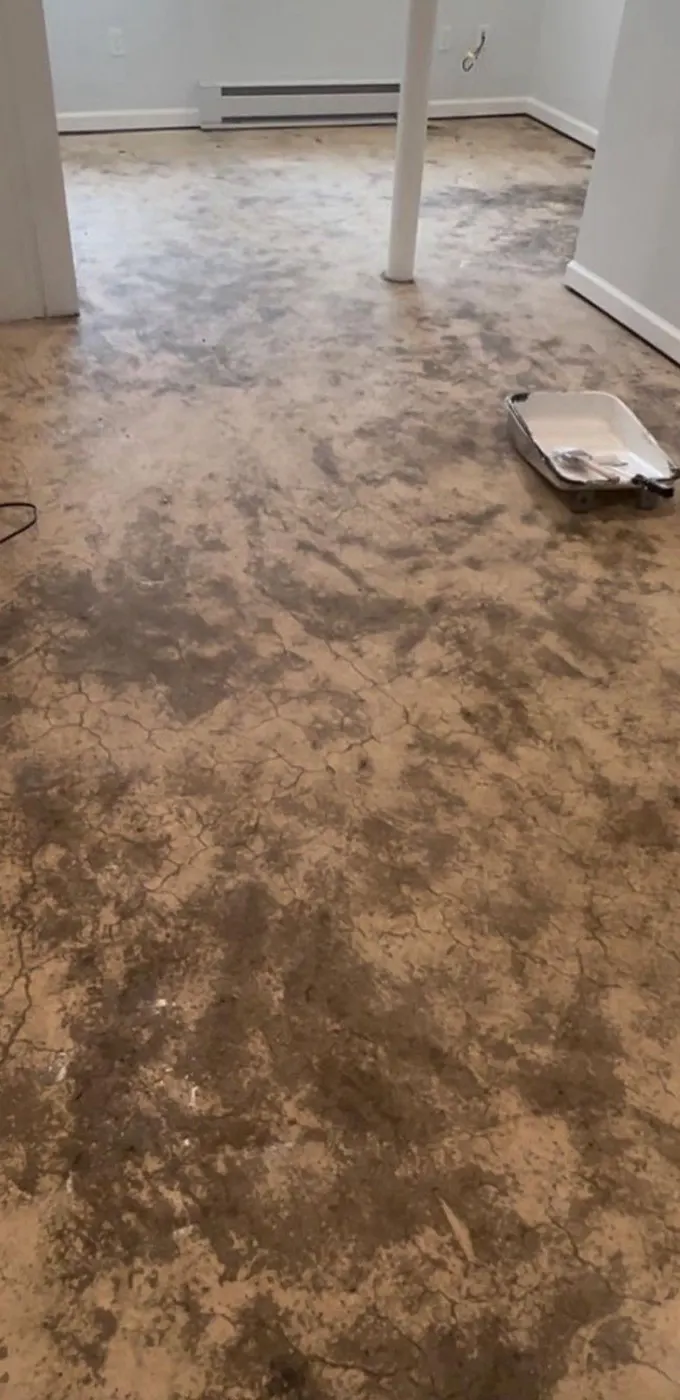
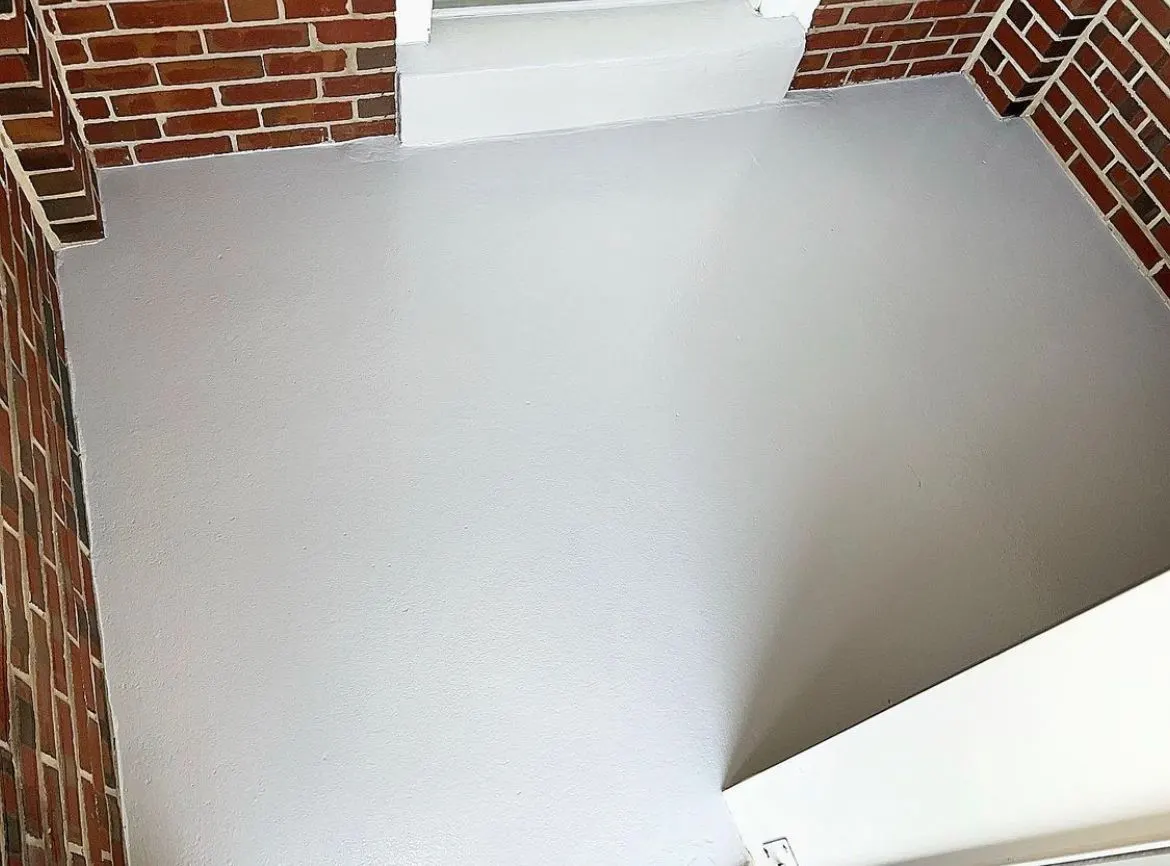
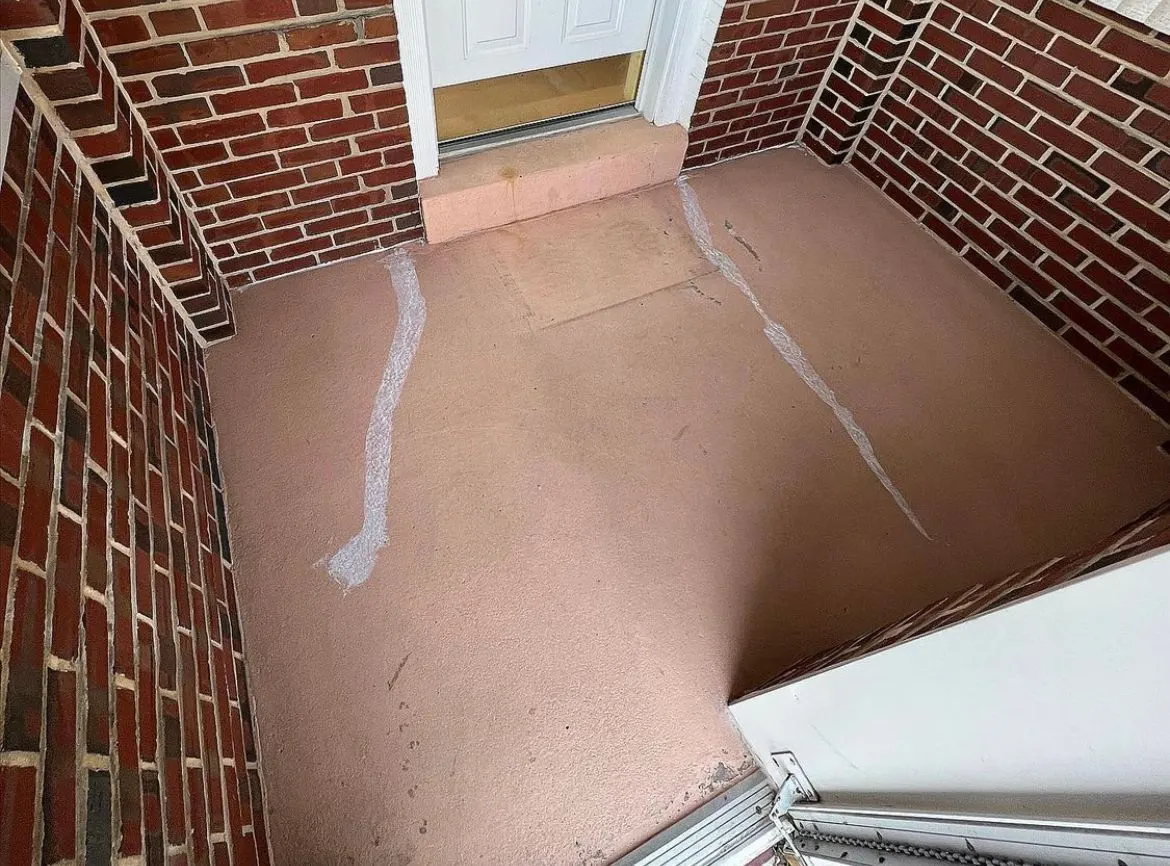
Three floors, before and after the coating.
A stained basement, a worn garage and a scuffed entry, each one the same floor in both frames.
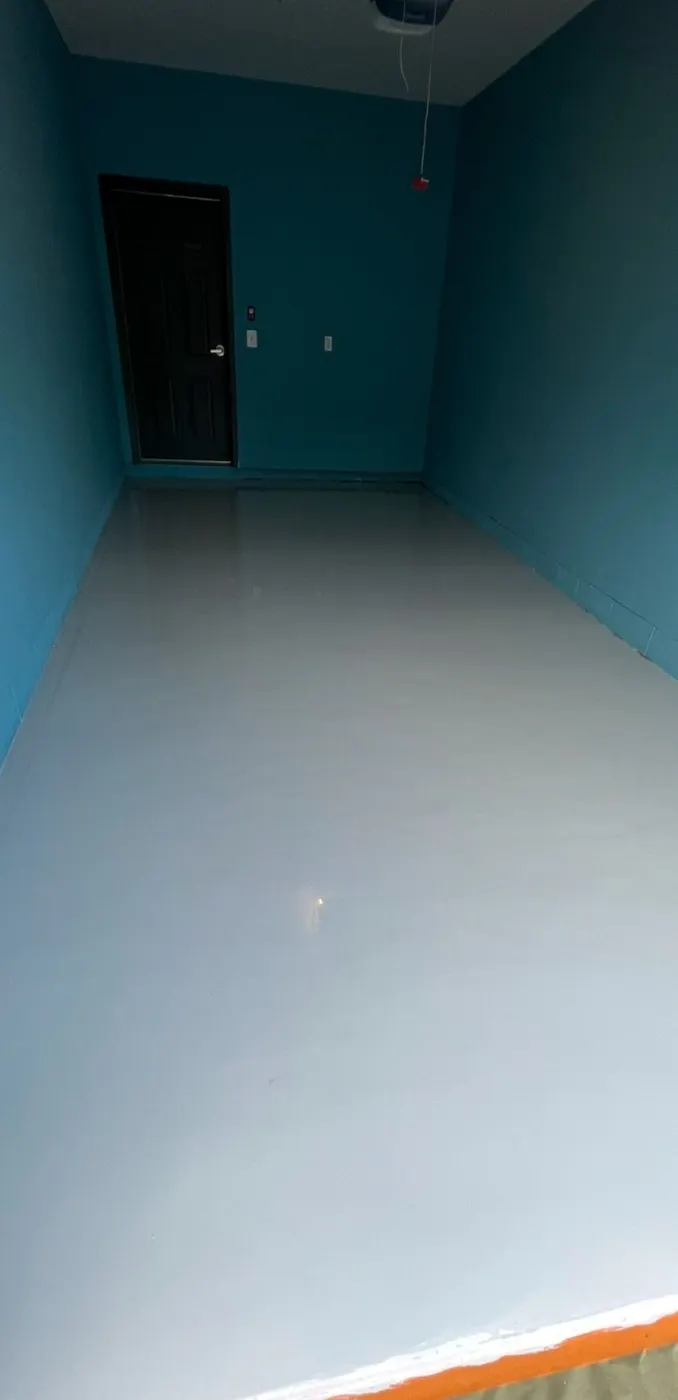
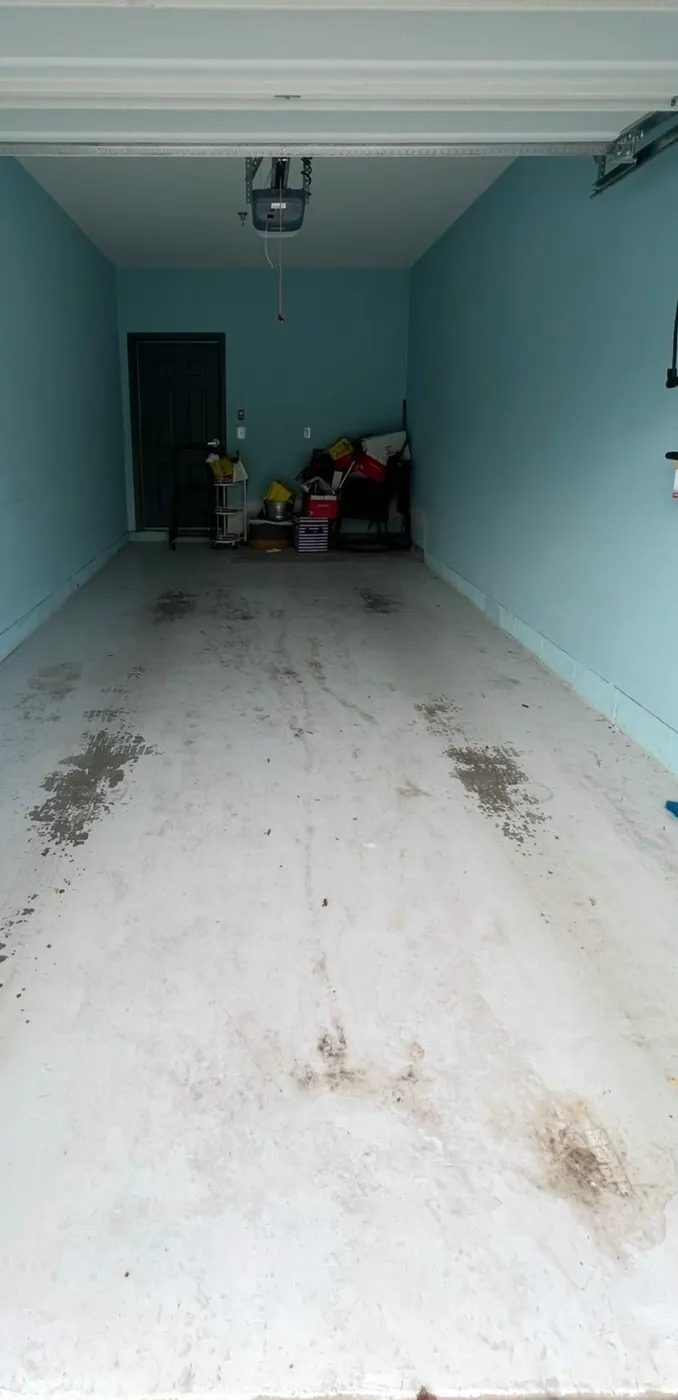
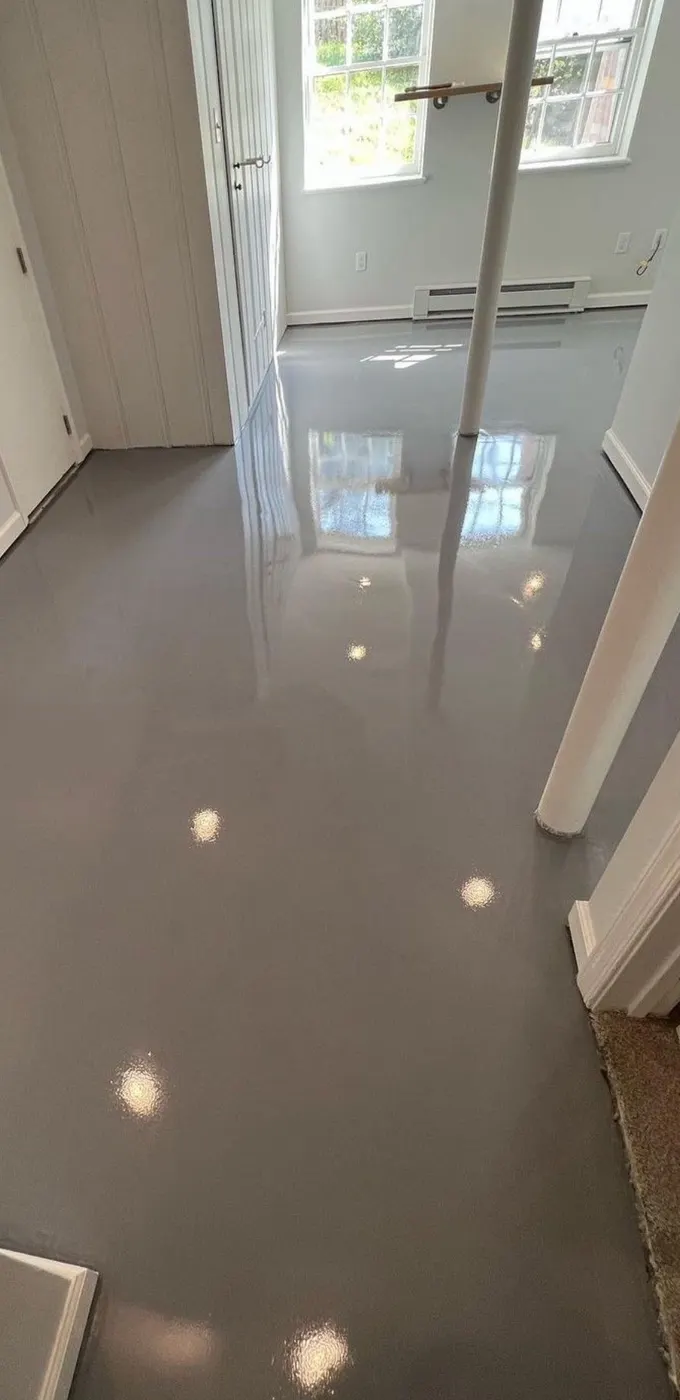
Seven steps, and four of them happen before any color.
The order is the whole point. Every one of the common failures is something that went wrong in the first four.
Ray looks at the slab
Age, cracks, what's already on it, and whether it's showing moisture. A garage floor gets priced off the slab, not off the square footage alone.
Everything out, everything masked
The garage has to be empty. Walls, door tracks and the threshold get masked, because grinding puts concrete dust everywhere it can reach.
Diamond grind
The slab gets mechanically profiled, so the primer has an open surface to bond to.
Cracks and pitting filled
After the grind, when everything is visible. Filled, then ground back flush so the repairs do not telegraph through the finish.
Primer
Chosen for what the slab is doing, including a moisture-tolerant primer where the concrete calls for one.
Base coat and flake
Flake is broadcast into the wet base until the floor will not take any more, then scraped back once it has cured.
Topcoat, then cure time
The topcoat goes on and then the floor needs time before it takes weight. Foot traffic comes back before vehicles do, and Ray gives you both on the day, because a number from a website would be a guess.
Take it from the people who've hired us.
Garage floor questions.
How much does an epoxy garage floor cost in Houston?
Epoxy garage floor coating in Houston starts around $7 per square foot, and the final number moves on the condition of the slab and the system you choose. A two-car garage on a sound slab with a full flake system and a topcoat sits well above a plain single color on new concrete. Ray prices it per square foot once he has seen the floor, and the estimator will get you close before he arrives.
How long does an epoxy garage floor take?
An epoxy garage floor is a multi-day job, and cure time is the reason, not labor. The grinding, filling and coating move quickly; the waiting between coats and the cure before the floor takes a car are what set the schedule. Ray gives you the actual dates with the quote, because a cool damp week and a hot dry one are not the same job.
Do I have to grind the floor, or can you just etch it?
Grinding is what we do. Acid etching leaves a far weaker mechanical key for the coating to hold onto. Diamond grinding opens the surface properly and removes whatever sealer or oil is already in the concrete. If a quote comes in well under the others, ask straight out whether it includes grinding or whether it's an etch.
Will epoxy peel off my garage floor?
An epoxy garage floor can peel, and it usually comes down to one of three things. The slab was never properly profiled, so the coating never keyed into anything. The concrete is pushing moisture up from underneath and the coating has nowhere to let it go. Or a hot tire sat on a thin, poorly bonded film and lifted it. All three get decided before the first coat goes down, which is why the grind and the moisture check both get a full look before anything is priced.
What are the downsides of an epoxy garage floor?
An epoxy garage floor has four real downsides: it's a multi-day job with the car parked outside until the floor cures, moisture coming up through the slab can push it off, a thin or badly bonded coat can lift under hot tires, and a solid color shows every flaw in the concrete. The grind and the right primer handle the bond and the moisture, a polyaspartic topcoat handles hot tires, and flake hides what a solid color would show. The cure time is the one you plan around, and Ray gives you the dates with the quote.
Can you coat a cracked or older slab?
A cracked or older slab can be coated when the concrete is stable and dry. Cracks get filled after the grinding, because that is the point at which you can see all of them. A slab that is still moving, or one pushing moisture through, is a conversation before it is a quote, and Ray will say so if your floor is a poor candidate.
Is a flake floor slippery when wet?
A flake floor is less slippery than a solid color when wet, which is one reason it works well in a garage. The chip leaves texture in the surface, so a floor that has had a wet car parked on it has something underfoot. Where slip resistance really matters, in a pool surround or a workshop, an additive goes into the topcoat to push it further.
Is the 3-Year Workmanship Warranty on this?
The 3-Year Workmanship Warranty applies on qualifying painting projects and starts the day a project is completed. A coated garage floor is a different system, so Ray confirms the terms for your floor before you sign, because traffic, moisture and the condition of the slab all change how a coating behaves. It never covers the slab itself: structural movement, moisture coming up through the concrete from below, or damage from impact and abuse.
Can I do an epoxy garage floor myself?
A DIY epoxy garage floor kit is usually one layer rolled onto a cleaned slab, and the step it skips is the mechanical grind that gives the coating something to key into. The professional system on this page is four layers over a diamond ground slab, with cracks filled and the moisture looked at first.
Do you do more than garages?
Yes, workshops, home gyms, patios, pool surrounds and laundry rooms all take the same coating systems with different priorities. Larger commercial floors, warehouses and shop floors are handled as commercial work, where the scheduling around a working business is the harder part of the job.
Where we coat floors.
The same systems and the same grind-first approach in every one of them. What changes from one garage to the next is the slab, and that is what changes the prep.
Epoxy garage floors in Tomball
Older stock around the town center and new build out toward 249.
Epoxy garage floors in Spring
Big subdivisions and big elevations, with plenty of direct Texas sun.
Epoxy garage floors in The Woodlands
Trees, shade and moisture.
Epoxy garage floors in Conroe
Lakeside properties, acreage and long drives.
Epoxy garage floors in Humble
Established neighborhoods, with Lake Houston and the airport both close by.
Get your garage priced.
Send the square footage and a photograph of the slab, or leave your number and Ray will look at it. What the concrete is doing now decides most of the price, which is why the number comes after somebody has seen it.
Painting the rest of the house at the same time? Interior house painting and the floor can be quoted together.
Get my free estimateor call Ray on (443) 743-8052