
Commercial epoxy flooring, phased around a floor that has to keep earning.
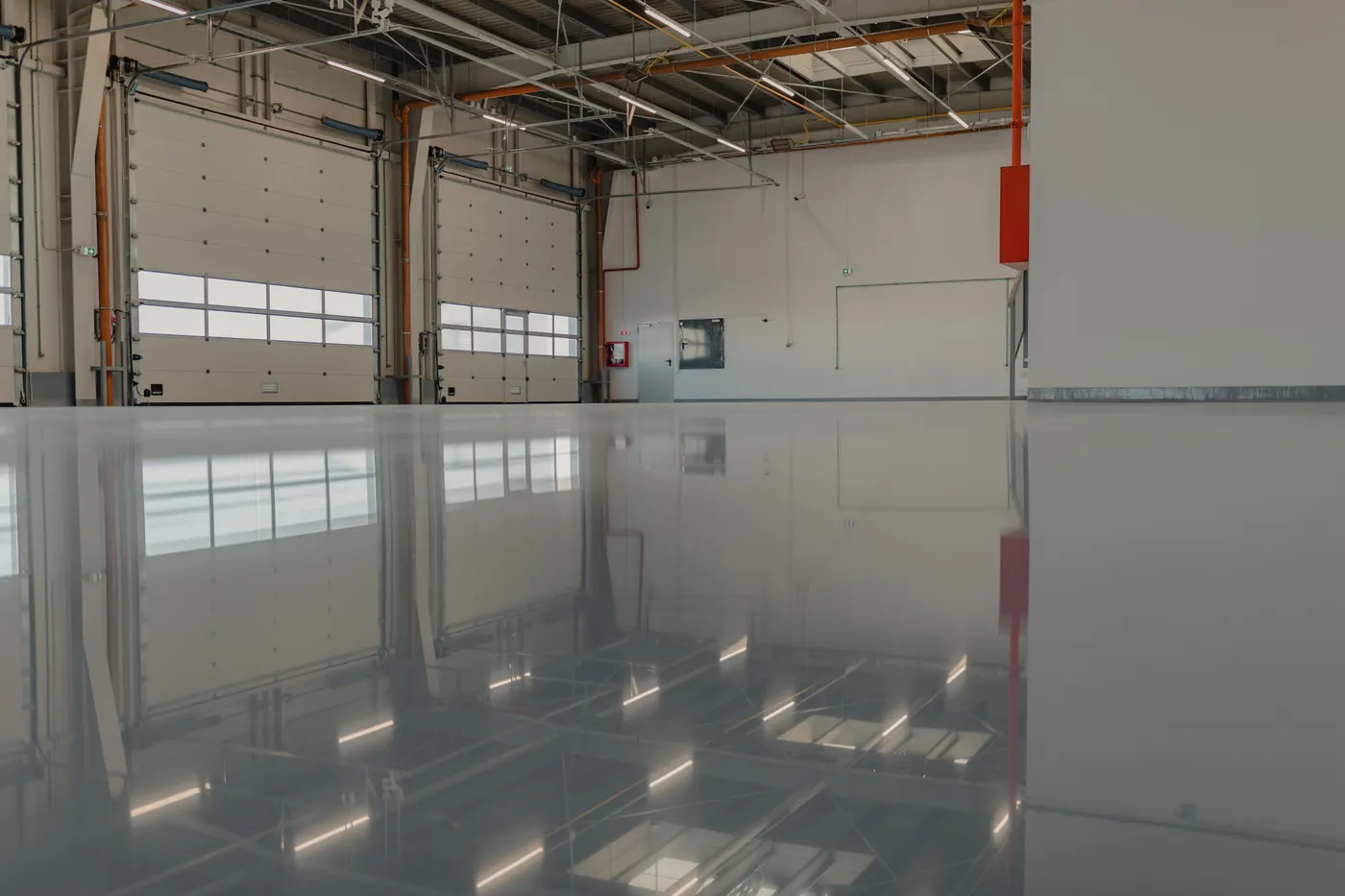
Warehouses, workshops, back-of-house and plant. Rise and Prime is Epoxy Certified and prices the floor per square foot, so the coating is the straightforward half. Working out how to take a floor out of service in pieces, without stopping the business on top of it, is the job.
122 Google reviews, 5.0 average.
On a working floor, the downtime is the hard part.
Commercial epoxy flooring is a coating system bonded to a diamond ground concrete slab in a working building, and on a commercial floor the expensive part is almost never the coating. It's the downtime.
- Epoxy certified installer
- Diamond ground, never acid etched
- Phased so the building stays open
- Nights and weekends where the project needs them
Send Ray the floor details.
Rough square footage, what crosses it, and which areas can come out of service and when. He'll walk it and phase it with you.
- 122 Google reviews, 5.0 average
- Epoxy certified installer
- Fully insured
A working floor asks for more than a garage does.
Scale is the obvious difference and it's the least important one. These are the rest.
Diamond grinding at scale
Mechanical profile, never acid etching.
A troweled commercial slab is polished smooth and a coating needs something to key into. Diamond grinding opens the surface and takes off whatever sealer, cure compound, paint or oil is already there. On a working floor that oil matters more than it does in a house, because years of it soaks in and nothing bonds through it. Acid etching is the shortcut, and it's why so many warehouse floors peel in sheets.
Moisture in the slab
Moisture pushes a coating off the slab from underneath.
Slab-on-grade over clay that holds water moves vapor up through the concrete continuously, and a non-breathable coating over that gets pushed off from underneath. It fails in patches that look like poor workmanship and aren't. The slab gets checked before anything is promised, and some floors need a moisture-tolerant primer while others need the conversation before the quote.
Traffic, and what will be crossing it
Forklift tires are a different problem from foot traffic.
A floor crossed by loaded pallet jacks and forklifts is being asked to survive point loading and hot tire contact, which is a completely different specification from a back-of-house corridor. Where the racking sits, where vehicles turn and where they brake are the places a floor fails first. Those get identified on the walkthrough so the system matches what's coming.
Phasing and downtime
The real cost line, and the one that's easy to underestimate.
A floor can't come out of service all at once, so it gets divided into sections that each go through the whole sequence and return to use before the next one opens. What makes that work is knowing the building's rhythm: which aisles are dead on which days, where stock can be shifted to, and how long a cure really needs before a loaded truck crosses it.
Dust, and the rest of the business
Grinding a floor puts concrete dust everywhere it can reach.
Grinding is a dusty operation and a working building has stock, equipment and people in it. Containment goes up around the phase being worked, and extraction is used at the grinder itself. On a food, medical or clean environment this stops being a courtesy and becomes the constraint that shapes the whole program.
Systems and topcoats
Flake, solid color, and what goes over the top.
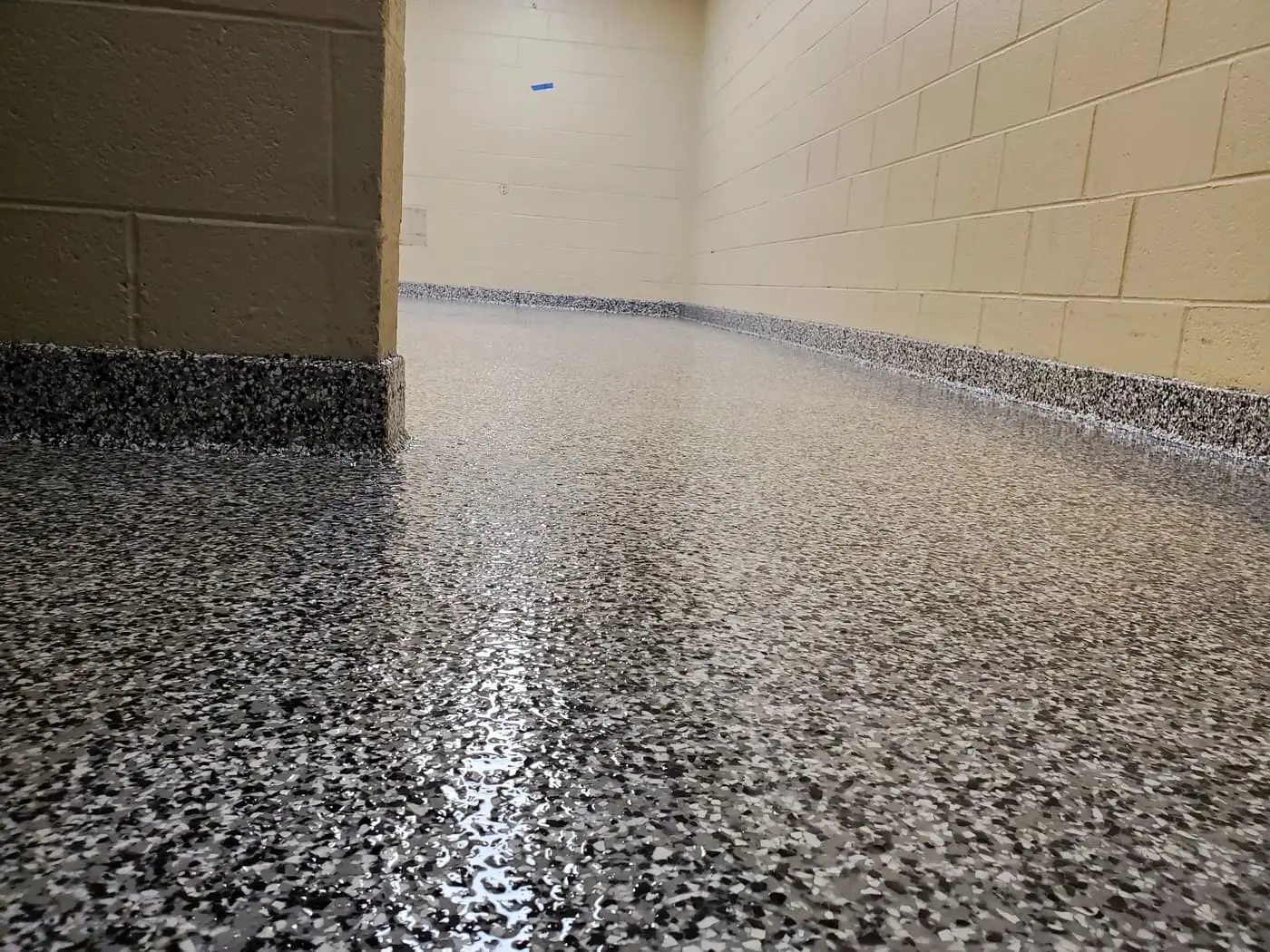
Flake adds texture and hides the imperfections a commercial slab always has, solid color is cleaner and far less forgiving, and a polyaspartic topcoat is what handles UV and hot tires. Slip resistance can be pushed further with an additive in the topcoat, which matters in a wash-down area or anywhere a spill is routine.
Epoxy garage floors in HoustonMore floors, and a warehouse from the lift.
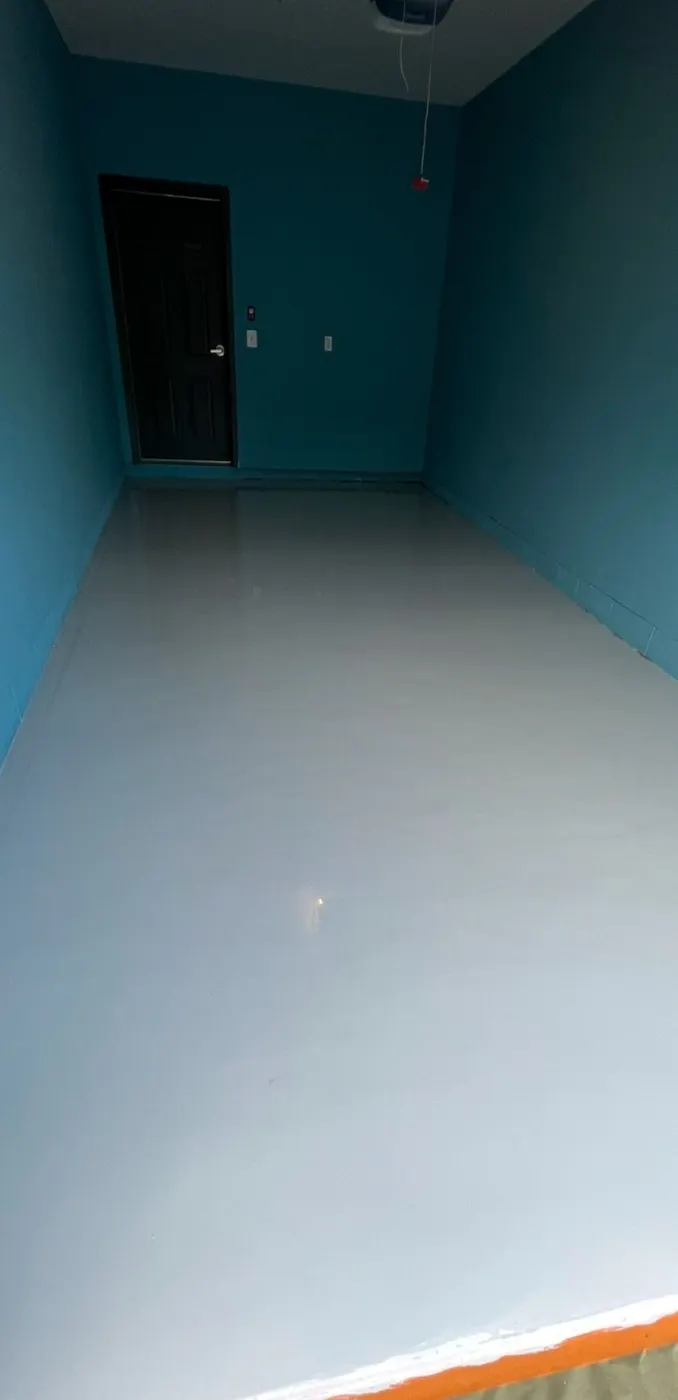
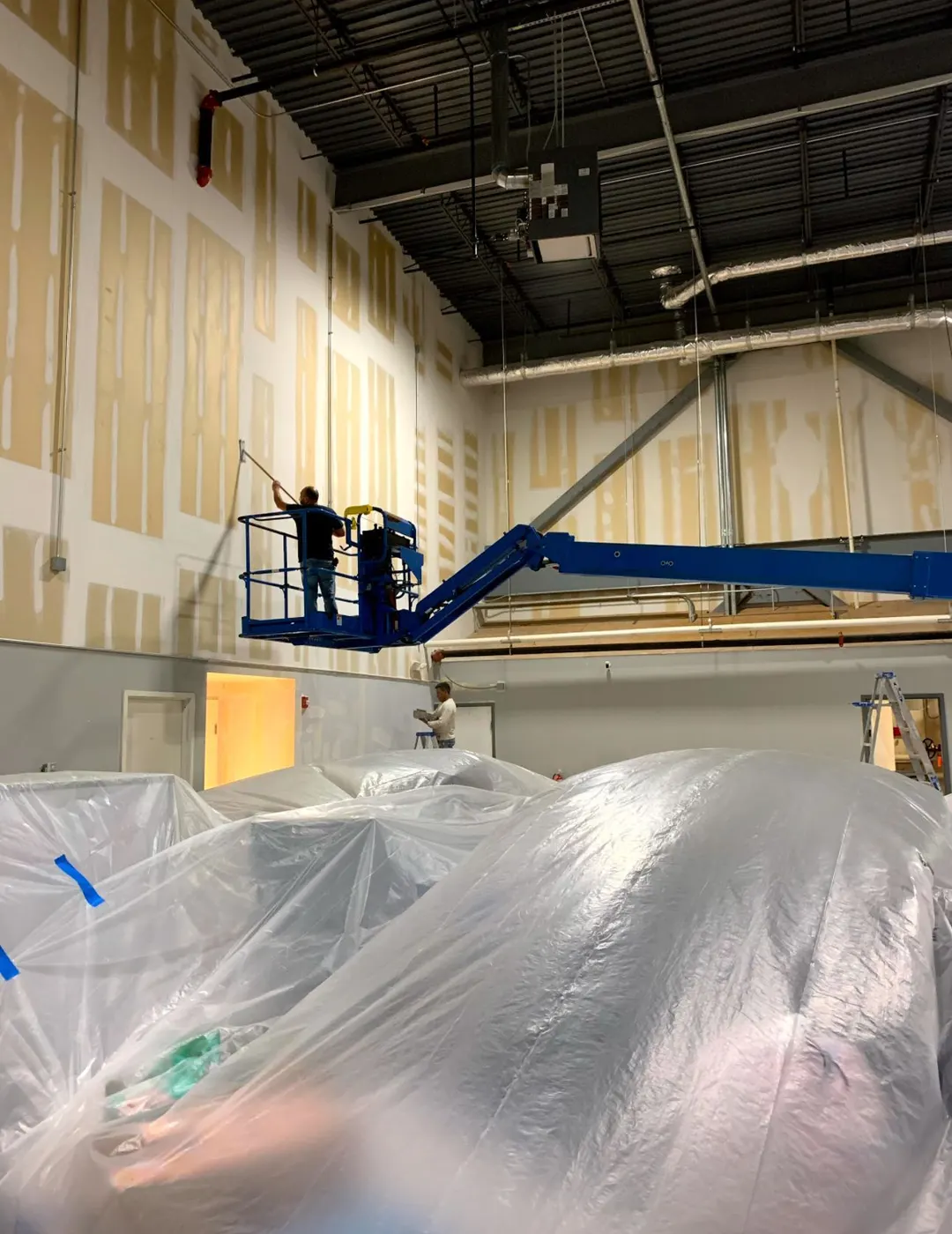
A warehouse painted from a boom lift, a flake-coated garage, and a basement floor in high-gloss gray.
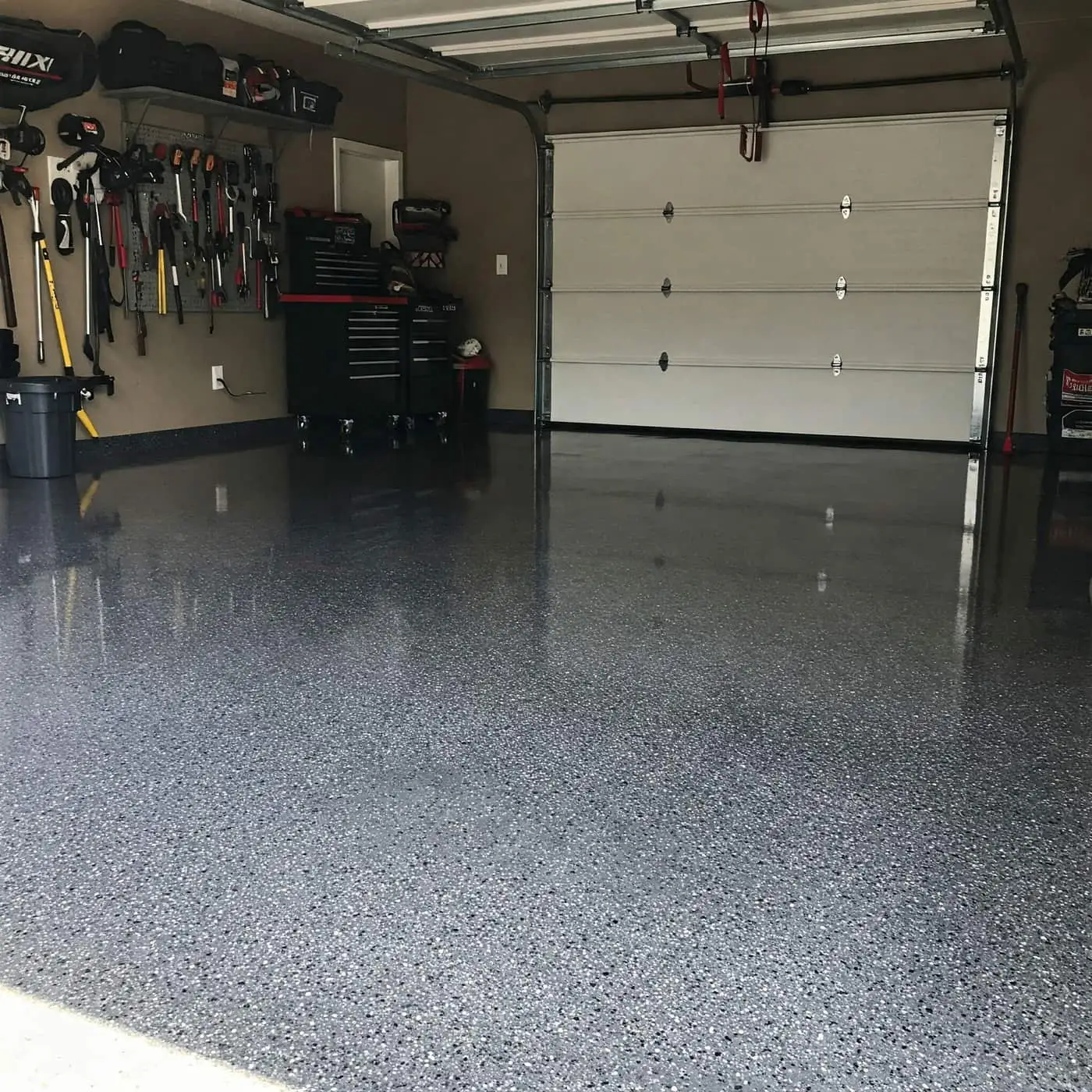
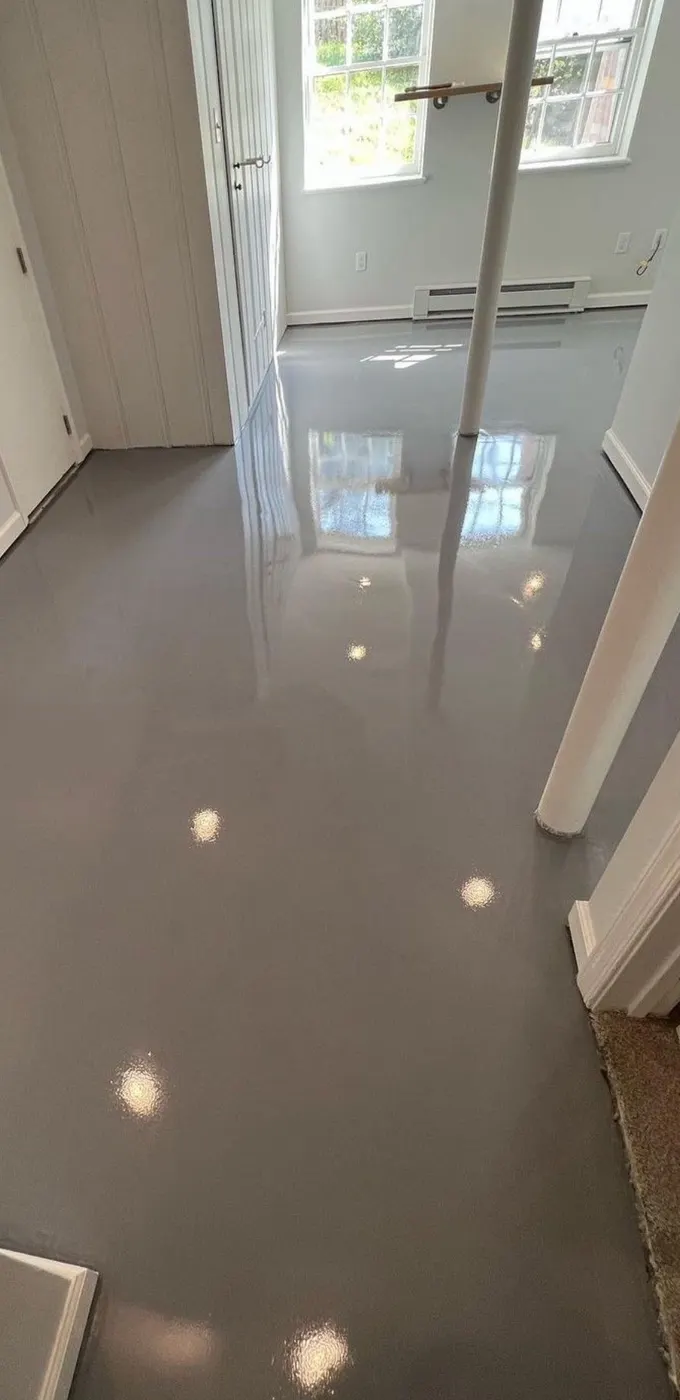
Grind first, prove the slab is dry, then coat it in phases.
Each section goes through the whole sequence and comes back into service before the next one is opened.
Walk the floor
On Houston jobs that's Ray. Square footage, what crosses it, where the racking sits and which areas can realistically come out of service.
Phase plan and written scope
The floor divided into sections with a sequence and a number against each line, so the downtime is visible in the quote instead of discovered later.
Isolate the phase
Containment around the section being worked, extraction on the grinder, and the rest of the building kept clear of concrete dust.
Grind and repair
Diamond ground to a mechanical profile, then cracks, pitting and joints filled and ground back flush once the grinding has made them all visible.
Prime for the slab you have
Chosen for what the concrete is doing, including a moisture-tolerant primer where the slab calls for one.
Coat, cure, hand it back
Base, flake where specified, then topcoat, and the section returns to service once it has properly cured. Foot traffic comes back before vehicles do.
What a floor coating is built from, bottom up.
A floor coating fails from the bottom, almost every time. The layers people notice are the last two, and the one that decides whether the floor holds is the first.
Topcoat
The wearing surface. It takes the traffic, the tires and the cleaning, and it carries the gloss level you end up looking at.
Build coat
The body of the floor. Flake or quartz goes in here when a floor is getting it, and it is what gives the surface its depth.
Primer
Wets into the open concrete and gives the body of the system something solid to sit on.
Surface profile
Opening the slab mechanically so a coating can key into it. A coating put over a sealed, sound-looking slab lifts in sheets later, and nothing applied on top of it fixes that.
Concrete slab
What everything above it has to hold on to. Whether it is sound, and what it needs before anything goes on it, is the part of the job that decides the rest.
This is what a floor system is made of in general, not a specification for your slab. What a particular floor needs depends on its condition and what happens on it, which is what Ray goes through on the walkthrough before anything is written down.
Take it from the people who've hired us.
Commercial floor questions.
Can you coat our floor without shutting the building?
Phasing is the normal way a commercial floor gets done and it's most of what you're buying. The space is divided into sections that each go through grinding, repair, priming and coating and come back into service before the next section opens. What makes it work is knowing the building's rhythm, which is why the walkthrough matters more here than on almost any other job.
Can the work happen after hours or on a weekend?
After-hours and weekend work on a commercial floor is available when the project and its scheduling requirements call for it. It gets settled per project at the walkthrough, because grinding, coating and curing each need a section closed for a different length of time, and those windows are what the phasing plan is built from. Tell Ray which nights or weekends the space can be handed over.
How long before forklifts can drive on it?
Foot traffic returns well before vehicles do, and the gap between the two is where most of the planning goes. The actual cure depends on the system, the temperature and the humidity that week, so Ray gives you real timings for your building instead of a figure from a website. Putting a loaded truck on an uncured floor is how a good installation gets ruined in an afternoon.
Our old floor is peeling. Can you go over it?
A peeling floor is telling you something, and coating over it repeats whatever went wrong. The usual causes are a slab that was never properly profiled, moisture coming up through the concrete, or a coating that was never right for the traffic. All of it comes off in the grind, and the cause gets identified before a replacement system is specified.
Do you test for moisture in the slab?
Moisture is checked before anything is promised, because slab-on-grade over Houston clay is exactly the condition that pushes a coating off from underneath. A slab moving vapor needs either a moisture-tolerant primer or a different conversation altogether, and finding that out after the first coat is the expensive way to learn it.
How much does commercial epoxy flooring cost?
A commercial epoxy floor is priced per square foot off the walkthrough, and the figure moves on the condition of the slab, the system specified and how much phasing the downtime requires. A clear floor done in one pass and a live warehouse done in eight sections are different jobs at the same square footage. The price is written and agreed before anything's booked.
What about dust while you are grinding?
Grinding puts concrete dust everywhere it can reach, so containment goes up around the working phase before any grinding starts. In a food, medical or clean environment that constraint shapes the whole program from the start, and it needs raising at the walkthrough.
What are the downsides of commercial epoxy flooring?
Commercial epoxy flooring has three real downsides: the floor has to come out of service while it's ground, coated and cured, moisture coming up through the slab can push a coating off, and a solid gloss finish can be slippery when wet. Phasing the floor in sections, a moisture-tolerant primer where the slab needs one, and flake or a slip additive in the topcoat are how each one gets handled.
Is an epoxy floor slippery when it's wet?
An epoxy floor in a smooth, solid gloss finish can be slippery when wet, which matters in a wash-down area or anywhere spills are routine. Flake adds texture to the surface, and an additive in the topcoat pushes slip resistance further where the floor needs it.
Do you do garages and residential floors too?
Garage and residential floors are a separate service, because a home garage and a working commercial floor are different jobs. Residential garage floor coating has its own page with its own pricing.
What warranty applies?
The 3-Year Workmanship Warranty applies on qualifying painting projects and starts the day a project is completed. A coated floor is a different system, so Ray confirms the terms for your floor before you sign, because traffic, moisture and the condition of the slab all change how a coating behaves. It never covers the slab itself: structural movement, moisture rising through the concrete and damage from impact or abuse aren't workmanship.
Walls and ceilings are part of the same conversation.
Floor coatings and wall or ceiling painting are two parts of the same commercial job. Rise and Prime scopes and prices both together at the walkthrough.
All commercial paintingGet the floor measured.
A commercial floor is priced off its condition, its square footage and what happens on it, and none of that is knowable from a photograph. Ray looks at the slab, writes the scope and names the system before anything is signed.
Doing the walls at the same time is usually cheaper than doing them later: that is interior commercial painting, and it can go on one scope with the floor.
Get my free estimateor call Ray on (443) 743-8052