
Interior commercial painting, in a building nobody closed.
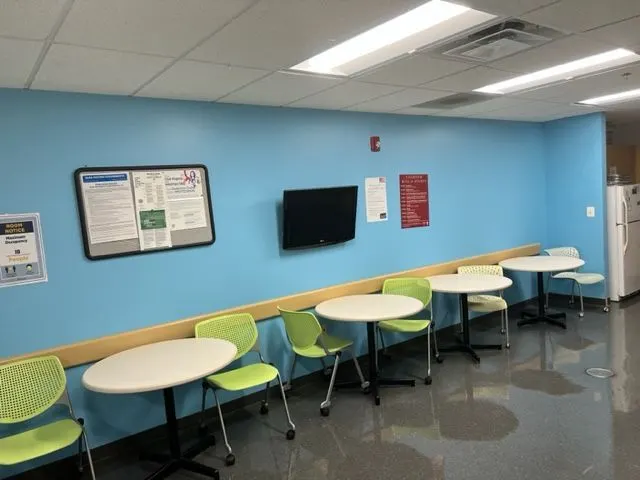
Offices, corridors, common areas and suites, painted while the building stays in use around the crew. Containment, odor control and the route people take through the space get planned before any paint does.
What decides whether the job goes well?
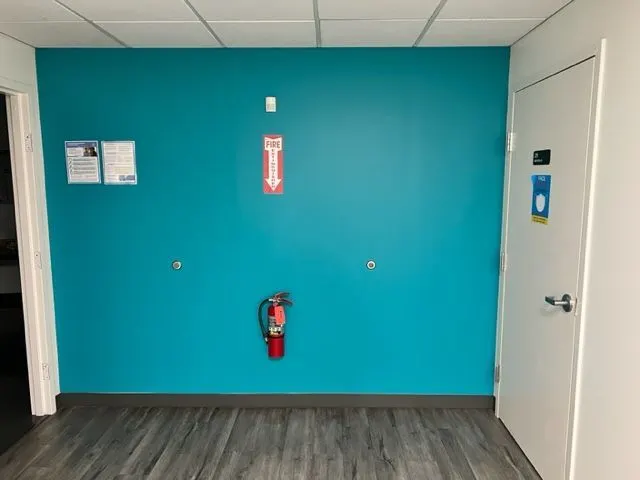
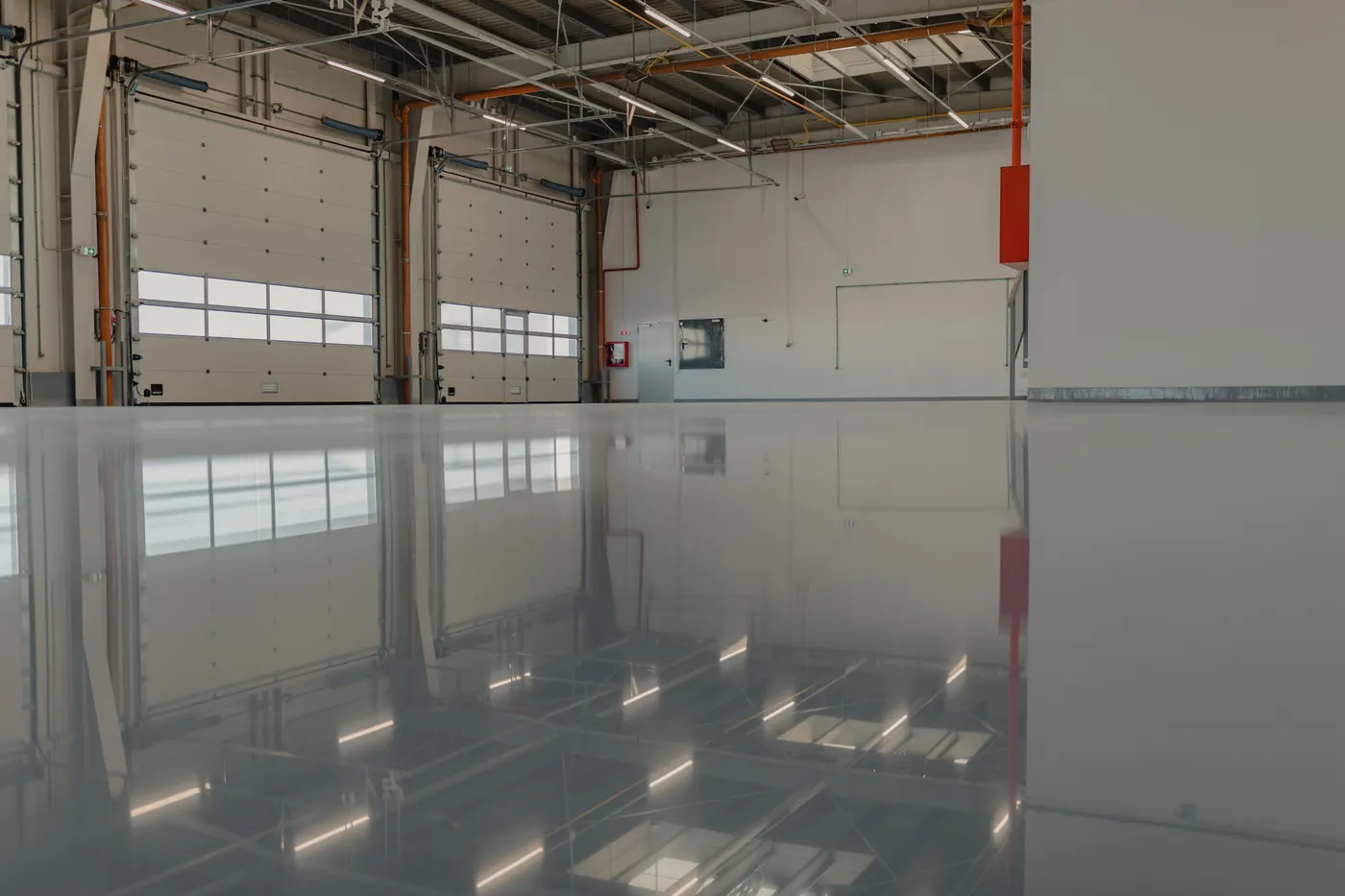
Interior commercial painting means repainting the inside of a building that stays open through the job, and almost everything hard about it comes down to the people still using the space.
An empty shell is easy. What's hard is a floor where somebody's on a call twelve feet from your ladder. That turns a painting job into a containment and sequencing job: zones sealed before anything's disturbed, low-odor products where people are staying put, and an agreed route in and out that doesn't cut through the part of the business that can't be interrupted. Where the project and the schedule call for it, that work moves into evenings and weekends. Ray settles which hours at the walkthrough.
- Zones sealed before anything is disturbed
- EPA Lead-Safe Certified Firm
- Written scope, line by line
- Ray walks Houston jobs himself
Ray needs to know how the space runs.
Floor area, what the space is used for, and the hours the building can't give up. He'll walk it and put the scope in writing.
- 122 Google reviews, 5.0 average
- EPA Lead-Safe Certified Firm
- Fully insured
- 3-Year Workmanship Warranty
Zones, not walls.
An occupied interior gets sequenced by the space people need, not by whichever order suits us best.
Walk the building
On Houston jobs that's Ray. Access, hours, which spaces stay occupied and what the substrate really is, none of which survives a phone call.
Scope in writing
Surfaces, preparation, products and coats, each with a number beside it, so a manager can circulate it without translating it first.
Insurance and building sign-in
Certificate of insurance naming the building, plus badging, escorts or loading arrangements where the property needs them.
Seal the zone
Containment up, floors and fixtures covered, route agreed. Where EPA's lead rule applies, its work practices start right here.
Work the zone out
Prep, prime and coat within the sealed area so the building keeps operating around it, then clean and hand the space back before opening the next one.
Walk it with the manager
The punch list is walked on site with the building manager.
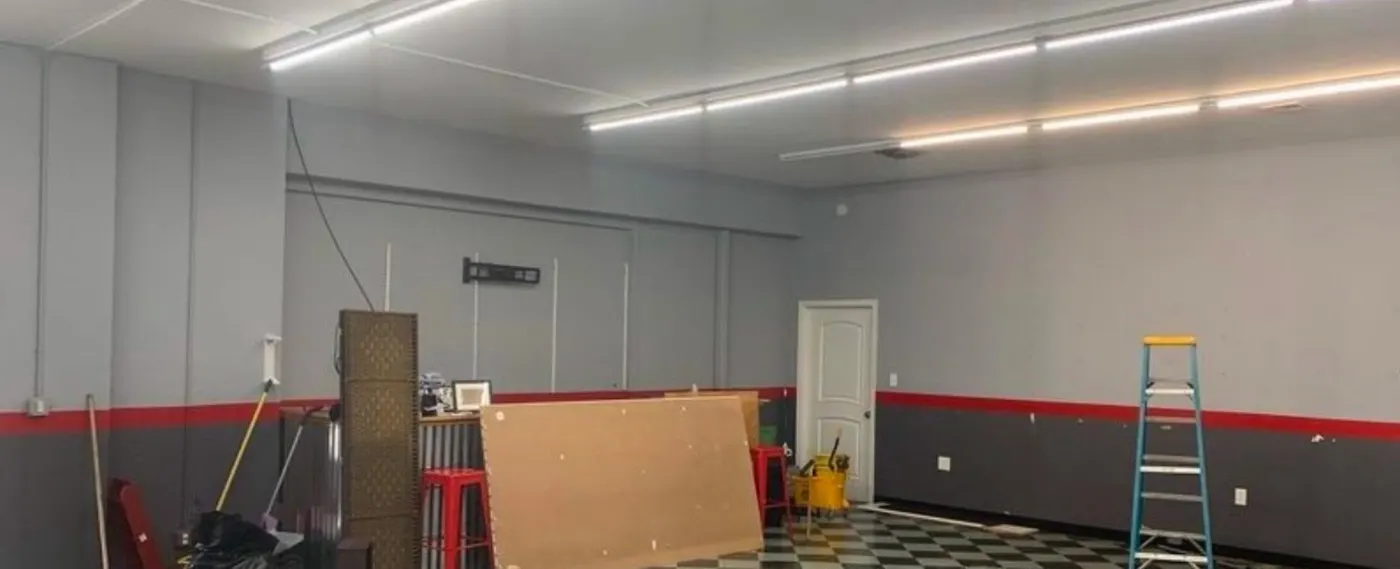
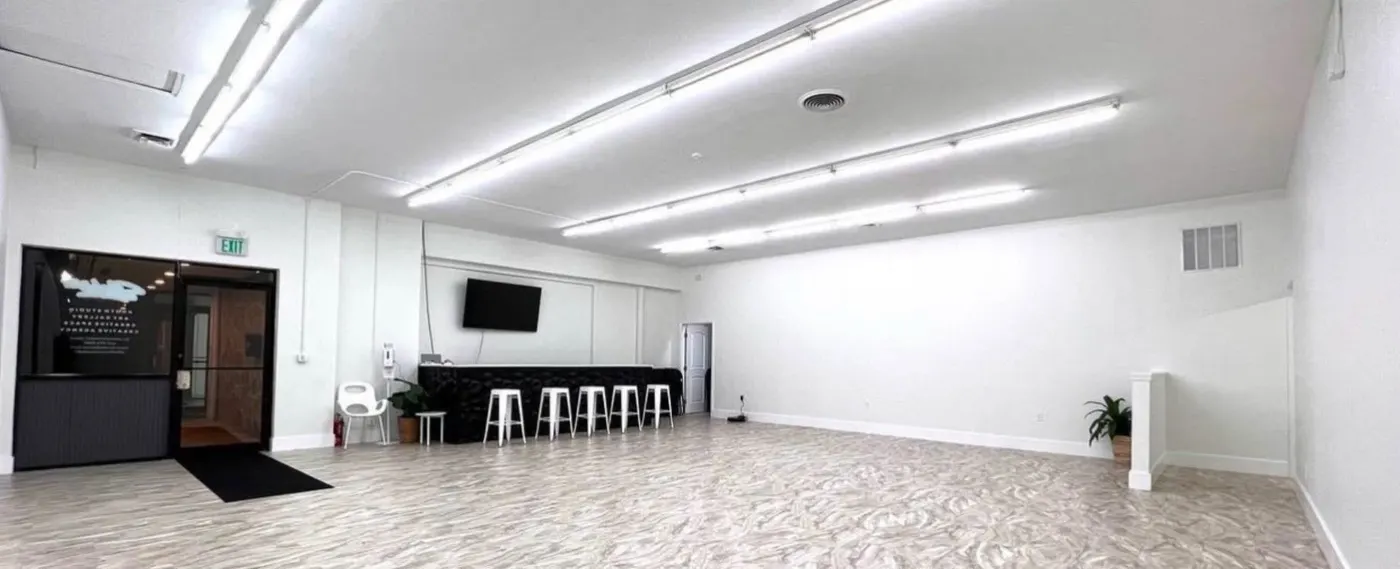
Commercial interiors, mid-job and finished.
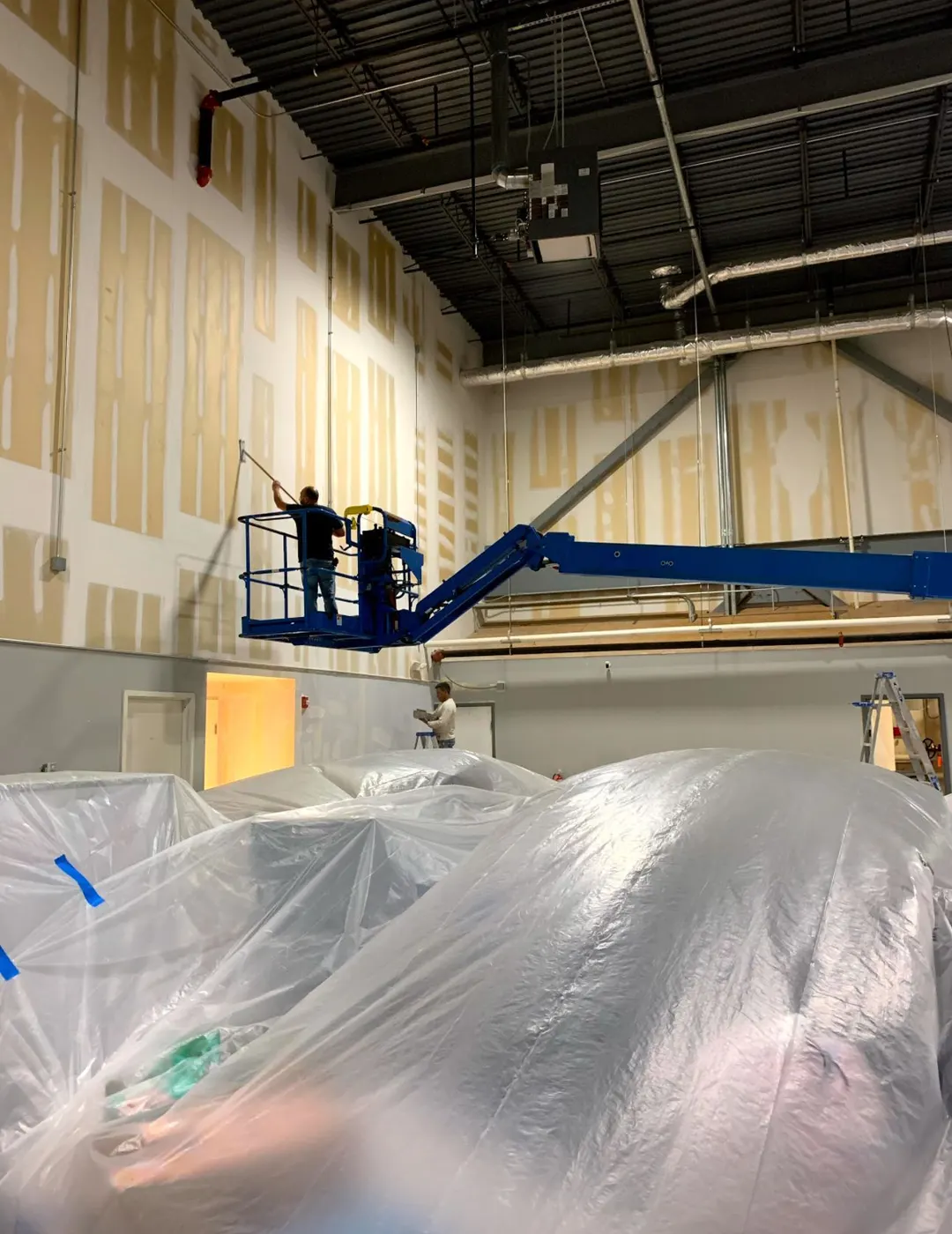
Warehouse walls painted from a boom lift over plastic sheeting, and a room that went from gray and red to all white.
Six things to settle before anyone paints an occupied floor.
Access, dust, odor and paperwork take more planning than the paint does.
Containment and dust
Sealed before anything is sanded, not after.
Dust travels further than people expect, and it lands on desks, keyboards and stock. Zones get sealed with proper containment before any sanding or scraping starts. Where a property is pre-1978 housing or a child-occupied facility, EPA's lead rule prescribes exactly how that containment has to work, and Rise and Prime's the certified firm already set up to do it that way.
Odor, and the people staying put
Low-odor products where the space cannot be emptied.
Odor is the complaint that reaches a property manager fastest, and it's largely a product choice made before the job starts. Low-odor and low-VOC coatings go where people are staying in the space, and the higher-odor work gets scheduled into whatever windows the building can give up. It's a walkthrough conversation, because choosing it afterwards is too late.
Corridors, lobbies and shared space
Never empty, and everyone walks through them.
A corridor can't be closed, so it gets worked in sections with a clear route kept open the whole time. Lobbies are worse, because they're the first thing a visitor sees and the last place a building wants a drop cloth. Both usually end up in whatever quiet hours the building can offer.
Building requirements
Certificates, access and whatever the property needs first.
A certificate of insurance naming the building, agreed access and loading arrangements, and sometimes badging or an escort. None of it's difficult and all of it eats time if it starts on day one. Raise your building's requirements at the walkthrough and they stop being a delay.
Pre-1978 interiors
Required on pre-1978 housing and child-occupied facilities specifically.
EPA's lead rule covers pre-1978 housing and child-occupied facilities such as schools and daycares. Where it applies, disturbing the paint means prescribed containment, work practices and cleanup verification, and Rise and Prime's the certified firm already covering that part. Worth asking any contractor you're considering for their own EPA certification number before they touch a wall.
Multi-unit interiors
Corridors, stairwells, common areas and unit turns.
Multi-unit interior work is a scheduling problem with painting attached. Shared circulation is never empty, and unit turns have a handover date that doesn't move. A scope a board can circulate is how we quote it anyway: surfaces, preparation, products and coats, each with a number beside it.
What goes on an interior wall, in order.
Paint is the last thing that happens. What is underneath it decides how long it holds, and most of a commercial interior job is the part nobody sees once the furniture goes back.
The finish
The layer people see and touch. Sheen gets picked for what the room takes, which in an office corridor is not what it is in a boardroom.
Primer or sealer
Gives the finish something consistent to grip, and stops a patched or porous wall drinking the coating unevenly so the repairs show through.
Preparation
Filling, sanding and making the surface sound. A coating is only ever as flat and as well stuck down as what it went on to.
Drywall, block or plaster
What everything above it has to hold on to. Whether it is sound, and what it needs before anything goes on it, is the part of the job that decides the rest.
This is what a coating system is made of, not a scope for your building. Which primer and which finish a surface needs is decided on the walkthrough, and the products Ray picks are named on the quote before you sign it.
Take it from the people who've hired us.
Interior commercial questions.
Can you paint our offices while we are still working?
Working around an occupied business is the normal case for interior commercial work, and it changes how a job gets planned far more than how it gets painted. Space is sealed and worked zone by zone, low-odor products go where people are staying put, and the route in and out is agreed before day one. Tell us which areas can't be interrupted and that shapes everything else.
How do you keep the dust down?
Containment goes up before any sanding or scraping begins. Zones are sealed, surfaces and fixtures covered, and negative pressure goes in where the space and the substrate call for it. On a property covered by EPA's lead rule, mainly pre-1978 housing and child-occupied facilities, the containment and cleanup verification are prescribed by federal regulation, so they aren't ours to choose.
What about the smell?
Odor is the complaint that reaches a property manager fastest and it's mostly decided by the product, before a brush is picked up. Low-odor and low-VOC coatings go into spaces that stay occupied, and anything higher-odor gets scheduled into the windows the building can give up. It needs deciding at the walkthrough, because changing it later isn't really possible.
Do you work outside business hours?
After-hours and weekend work is available on occupied offices and commercial spaces when the project and its scheduling requirements call for it. It's settled per project at the walkthrough, because access windows are the biggest driver of a commercial schedule and they differ from one property to the next. Tell Ray which hours your building can give up and the sequence gets built around them.
Are you insured, and can you name our building on the certificate?
Rise and Prime Painting is fully insured, and a certificate of insurance naming the building is standard on commercial work. Bring your property management's insurance requirements to the walkthrough, so they're checked before a job is booked.
Is our building old enough to need lead-safe work?
Lead-safe work practices under EPA's rule apply to housing built before 1978 and to child-occupied facilities such as schools and daycares. Where it does apply, Rise and Prime's EPA Lead-Safe Certified Firm status covers the containment, the work practices and the cleanup verification the rule requires. It's the one certification worth confirming with any contractor before a job starts, because it can't be arranged once work is underway.
What does interior commercial painting cost?
Interior painting services are priced off the walkthrough, with a written scope putting a number against each line. There's no rate card, because a corridor repaint and a full floor of suites have almost nothing in common beyond the word painting. Either way, the price is written and agreed before anything's booked.
What paint do you use on a commercial interior?
Sherwin-Williams is the primary line on a commercial interior, matched to the surface: Emerald for premium walls and trim, and SuperPaint or Duration depending on the substrate. The product is named on the quote before you sign it.
Can you coat the floor as well?
Floor coatings on a commercial interior are quoted as commercial epoxy flooring, a separate scope with its own phasing, and Rise and Prime is Epoxy Certified. Tell Ray at the walkthrough if the floor is part of the job.
What warranty applies?
The 3-Year Workmanship Warranty applies on qualifying painting projects and covers failures caused by our workmanship on surfaces we prepared and painted: premature peeling, blistering or flaking from how a coating was applied. It starts the day the project is completed. Water intrusion, structural movement, substrate failure and existing coatings failing underneath all sit outside it, and Ray goes through the scope with you out loud. Floor coatings are a different system, so their terms get confirmed separately.
This is one half of a commercial job.
Exteriors, floors and the paperwork side all sit on the main commercial page, along with the sectors we work in and how the pricing gets put together.
Get the space walked.
Offices, retail, multi-unit buildings and warehouse interiors. The scope is written around how the space is used, because what a corridor takes is not what a boardroom takes, and it goes on paper before you sign.
Exteriors and elevations are exterior commercial painting. A coated floor is commercial epoxy flooring.
Get my free estimateor call Ray on (443) 743-8052