The questions to ask a painting contractor are the ones that turn a spoken promise into something written down: proof of insurance, a detailed estimate, who will be on site, how the surfaces will be prepared, how payment is scheduled and what happens if the paint fails. A good professional painting contractor answers all of them without hesitating, and the answers make quotes from one painting company and the next far easier to compare.
Ask them at the estimate, while the contractor is standing in the rooms being priced, so each answer can point at a real wall. Then ask for the important ones in writing, because a written answer is the one you can hold a painting company to.
What questions should you ask a painting contractor?
Four questions do most of the work when you’re hiring a painting contractor, whatever the size of the painting project.
Are you insured?
Ask for a certificate of insurance showing general liability and, where the company has employees, workers' compensation.
What's in the estimate?
Rooms, surfaces, prep, products, sheens, a start date and a price, all in writing.
Who does the work?
Employees or subcontractors, who leads the job on site and who you call with a question.
What's the warranty?
What it covers, how long it lasts, what it excludes and whether it's written into the contract.
Beyond those four, the useful questions are about your house: how this contractor will prepare these surfaces, what has to move and who moves it, and how floors and furniture will be protected. A contractor who has walked the rooms can answer specifically, and that specific answer is part of what you’re checking.
How many painting contractors should you get quotes from? Three is a common number, enough to see a range without turning the final decision into a second job, and the same questions work on each of the potential contractors you’re considering.
It also helps to ask how long the painting company has been in business, and for photos or references from recent painting projects like yours. A contractor who mostly paints new construction and one who mostly repaints lived-in homes can both be good, and they’ll answer the prep questions very differently.
Are you insured, and do you need a license?
Insurance is the question that protects you most directly. General liability insurance covers damage to your home or business during the job, and workers’ compensation covers the contractor’s own workers if one is hurt on site. Ask for a certificate of insurance before the work starts, and read it.
- Check the name on the certificate against the name on the estimate.
- Check the dates, so the policy is current for the weeks the work is scheduled.
- Check the coverage, general liability at minimum, plus workers’ compensation if the company has employees.
- Ask who issued it, so you can call the insurance agent if anything looks off.
What you need to know about licensing depends on the state. Texas does not require a state license for general painting contractors, so in Texas the useful checks are insurance, references and reviews. Maryland requires a license from the Maryland Home Improvement Commission (MHIC) for home improvement work, so in Maryland ask for the MHIC number, look it up on the state’s public register, and ask for the certificate of insurance too.
For a house built before 1978, ask one more question: how the contractor handles old paint that may contain lead, and whether the firm is EPA lead-safe certified. Sanding and scraping are where that question matters most.
What should the written estimate include?
A written painting estimate should list every room and surface, the prep, the products and sheens, the start date, the price and how changes are handled.
| Line on the estimate | What to look for |
|---|---|
| Scope | Every room and surface, including ceilings, trim, doors and closets |
| Prep | Washing, patching, sanding, caulking and priming, named |
| Products | The paint line and the sheen for each surface |
| Schedule | A start date and how long the crew expects to be there |
| Price | The total, the deposit and when the balance is due |
| Changes | How work outside the scope is priced, usually as a written change order |
| Warranty | What is covered, for how long, and the exclusions |
Ask how many coats of paint the price includes, and whether primer is its own line or folded into the paint. Estimates from two painting contractors only compare fairly when they cover the same scope of work. A lower number that leaves out the ceilings or the primer is a smaller paint job at a smaller price, and the gap shows up later as an extra charge or a thinner result.
How do deposits and payments work?
A painting contractor commonly asks for a deposit to schedule the work, sometimes takes progress payments on a larger job, and collects the final payment once the work is finished and walked through.
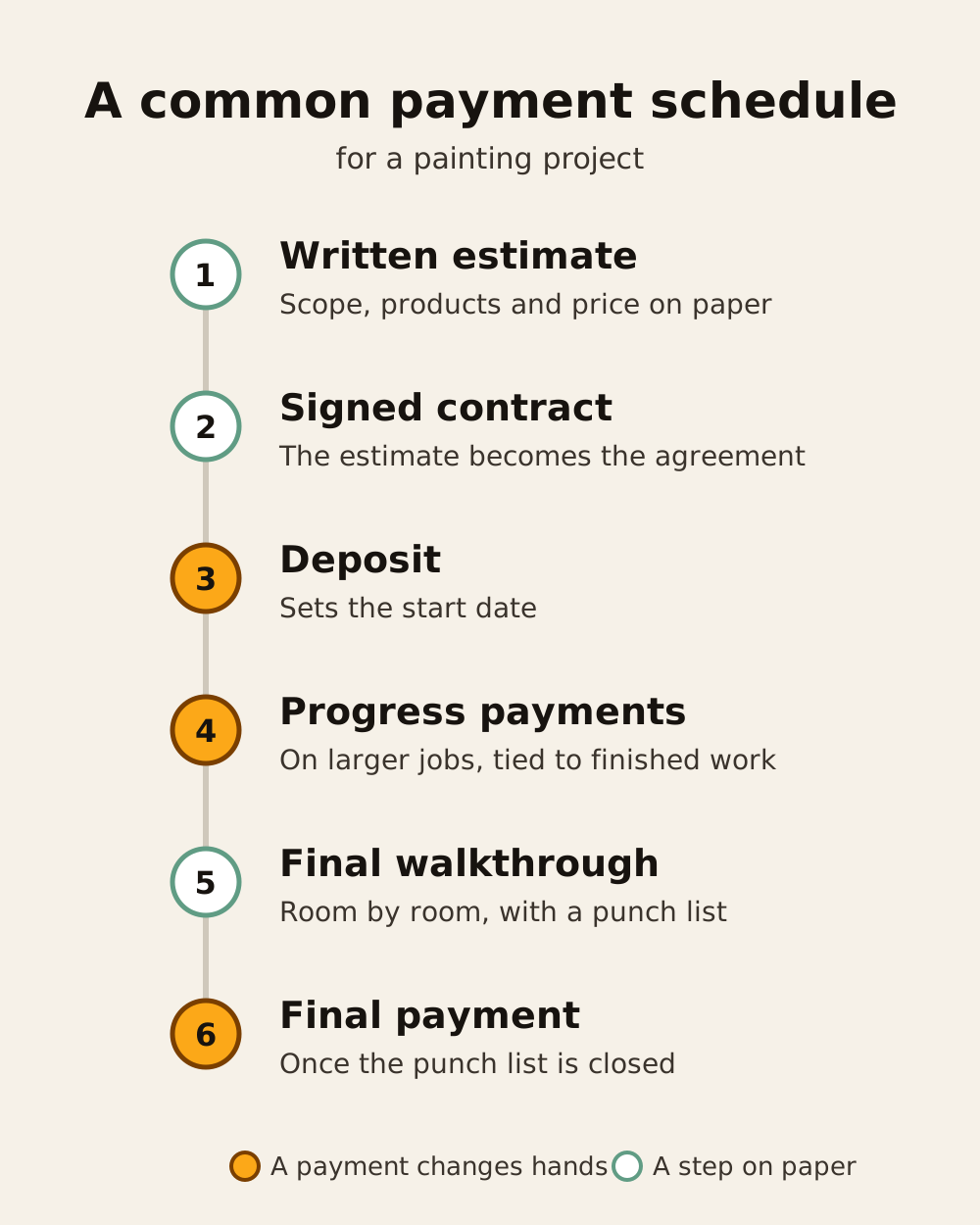
Be careful with a contractor who wants most of the price before any work starts, since the deposit is there to hold a place on the calendar and, on some jobs, to cover materials ordered for your house. Ask what the deposit covers, whether it’s refundable if the start date slips, and what has to be finished before each progress payment is due.
- Get the schedule written into the contract, with amounts and the trigger for each payment.
- Pay by a method that leaves a record, and keep every receipt.
- Hold the final payment until the final walkthrough is done and the punch list is closed.
If the question before any of this is what the paint job should cost, a painting cost calculator gives a ballpark from your rooms and surfaces before the first contractor visits.
Questions for each stage of the job
The questions don’t stop once the contract is signed. Each stage of a painting project has its own short list.
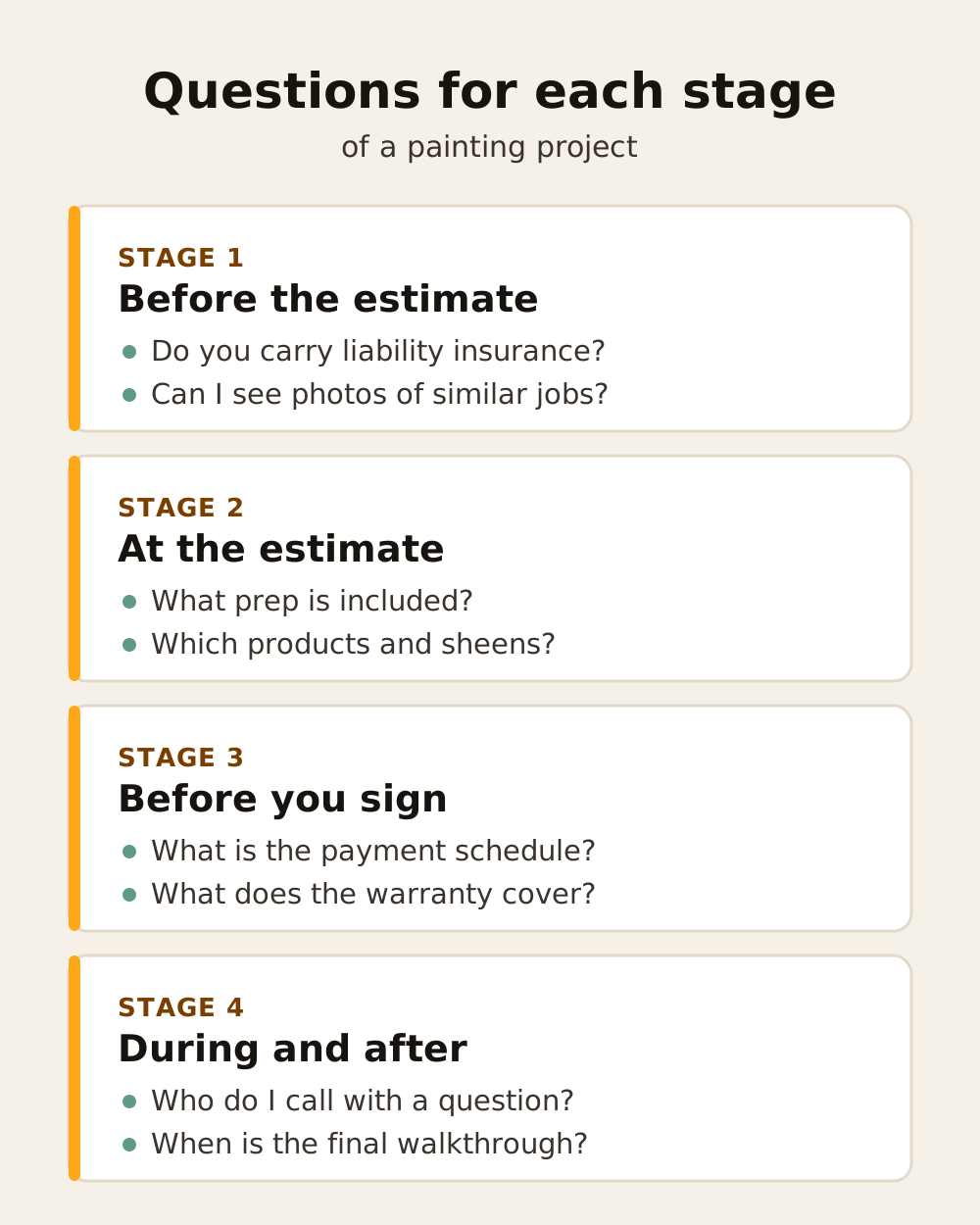
- Who leads the crew on site, and who do I call with a question?
- How many painters will be here, and during what hours?
- Which rooms will be off limits each day?
- How will you protect floors, furniture and fixtures inside, and the landscaping during exterior painting?
- How will the house be left at the end of each day, and who cleans up at the end of the job?
If the painting company uses subcontractors, ask whether they carry their own insurance and who on site answers for their work. In the painting industry, the person who sold you the job and the person holding the brush are often different people, and it’s worth knowing both names before the start date.
Hiring a commercial painting contractor for offices or other commercial properties adds a few questions of its own: working around open hours, after-hours or weekend scheduling, and the insurance certificate a building manager will ask for. For a home, the scope of interior house painting in Houston shows the kind of detail worth asking any contractor to match, from ceilings to doors.
What about colors, products and the warranty?
Ask which paint line the contractor plans to use on each surface and why, and whether the price changes if you choose a different product or sheen. Ask whether color help is part of the painting services you’re paying for, and whether samples go on the wall before you commit. A sample seen in morning and evening light on your own wall is a better guide than a paint chip held up in the store.
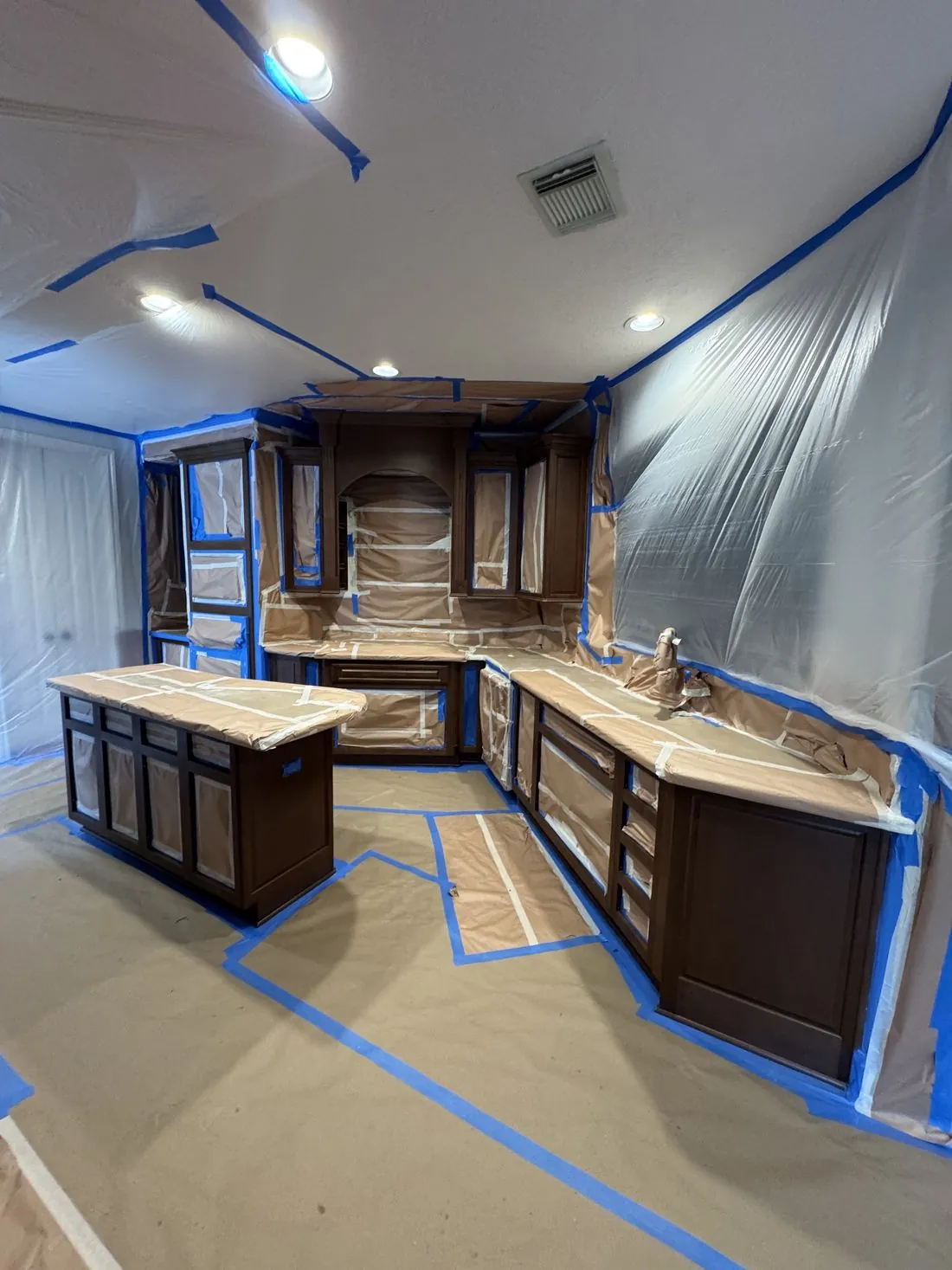
Kitchen cabinets need their own questions: whether the doors and drawer fronts come off, where the spraying happens, how the kitchen will be protected and how long it will be out of use. The cabinet painting in Houston page lays out what a cabinet scope can cover, from cleaning and degreasing to reassembly.
A workmanship warranty covers failures caused by how the paint was applied, such as peeling or blistering on a surface the contractor prepared, and it usually excludes problems like water damage and wear. Ask how long it lasts, when it starts and whether it’s in the contract. Ask as well how you’d report a problem, who comes out to look at it, and whether the coverage stays with the house if you sell it before the term runs out.
Red flags worth walking away from
A few answers are reasons to keep looking for the right painting contractor, whatever the price.
- No certificate of insurance, or one that’s expired or issued to a different name.
- A firm price over the phone for rooms nobody has seen.
- Pressure to sign today to keep a discount.
- A large payment demanded before any work starts.
- A vague estimate that lists painting services without naming the prep, products or scope.
- No written warranty, or one that never makes it into the contract.
- Cash only, with no written estimate or receipt.
Negative reviews are worth reading as well. Look at how the painting contractors you’re comparing responded, since the reply tells you more about how a problem would be handled than the complaint does.