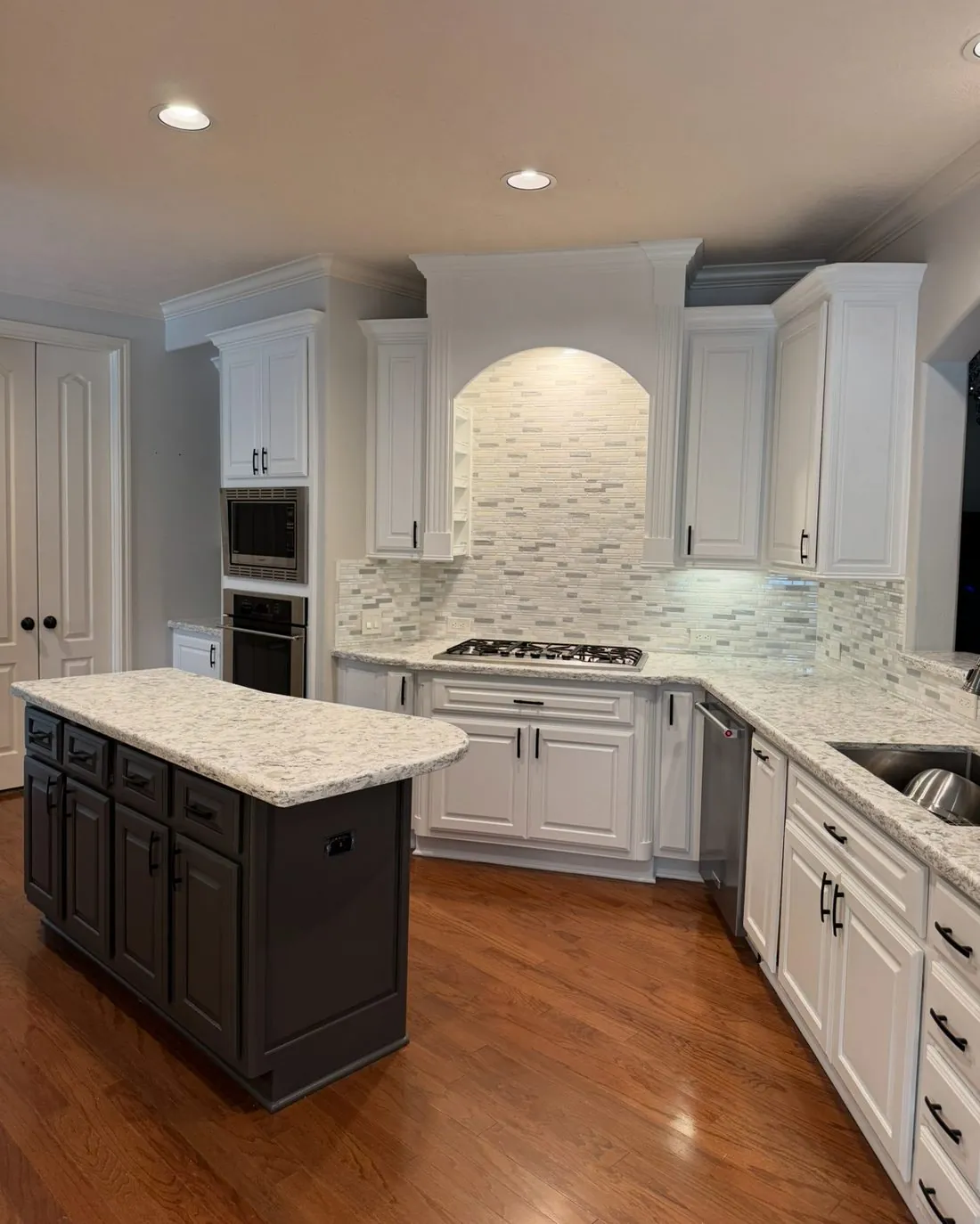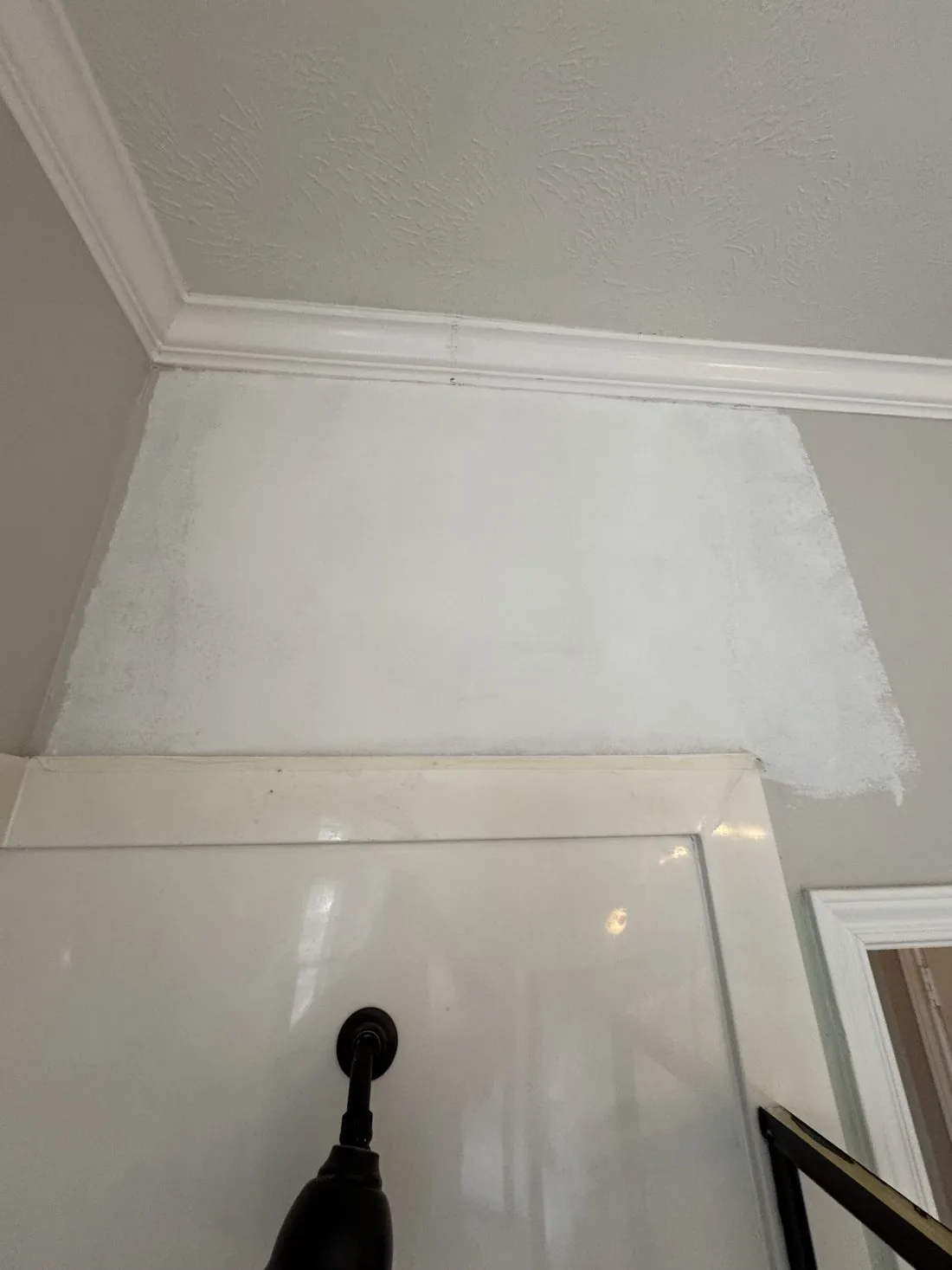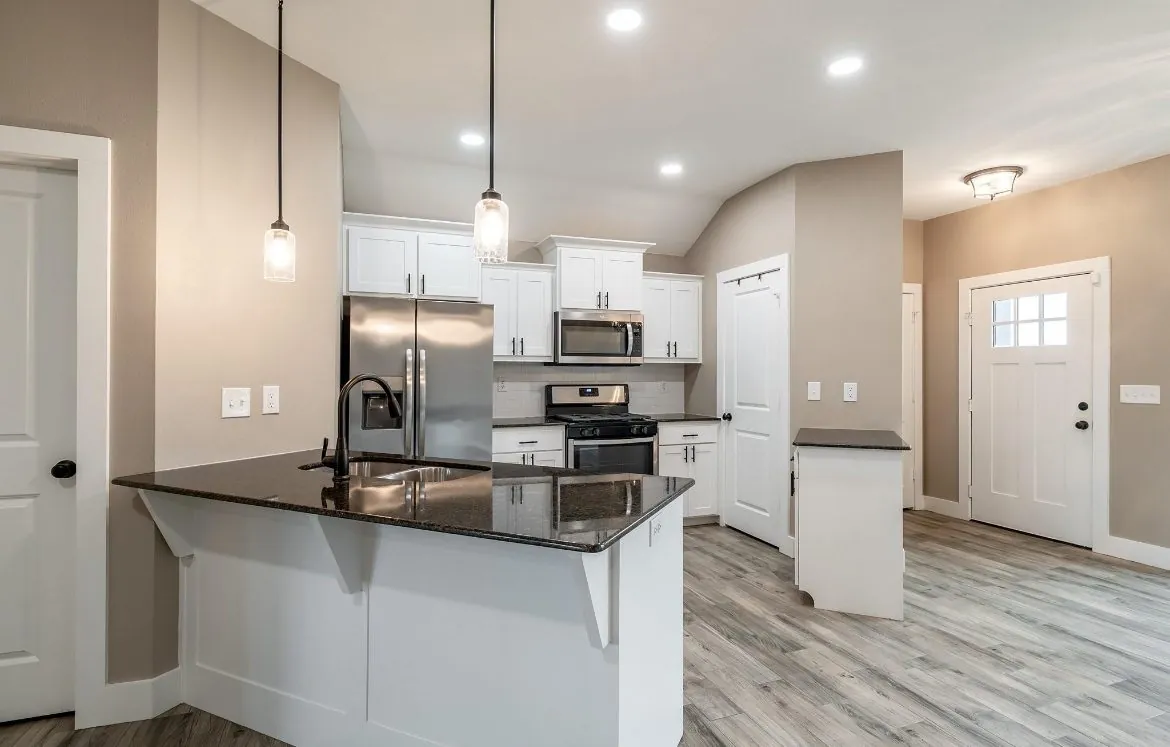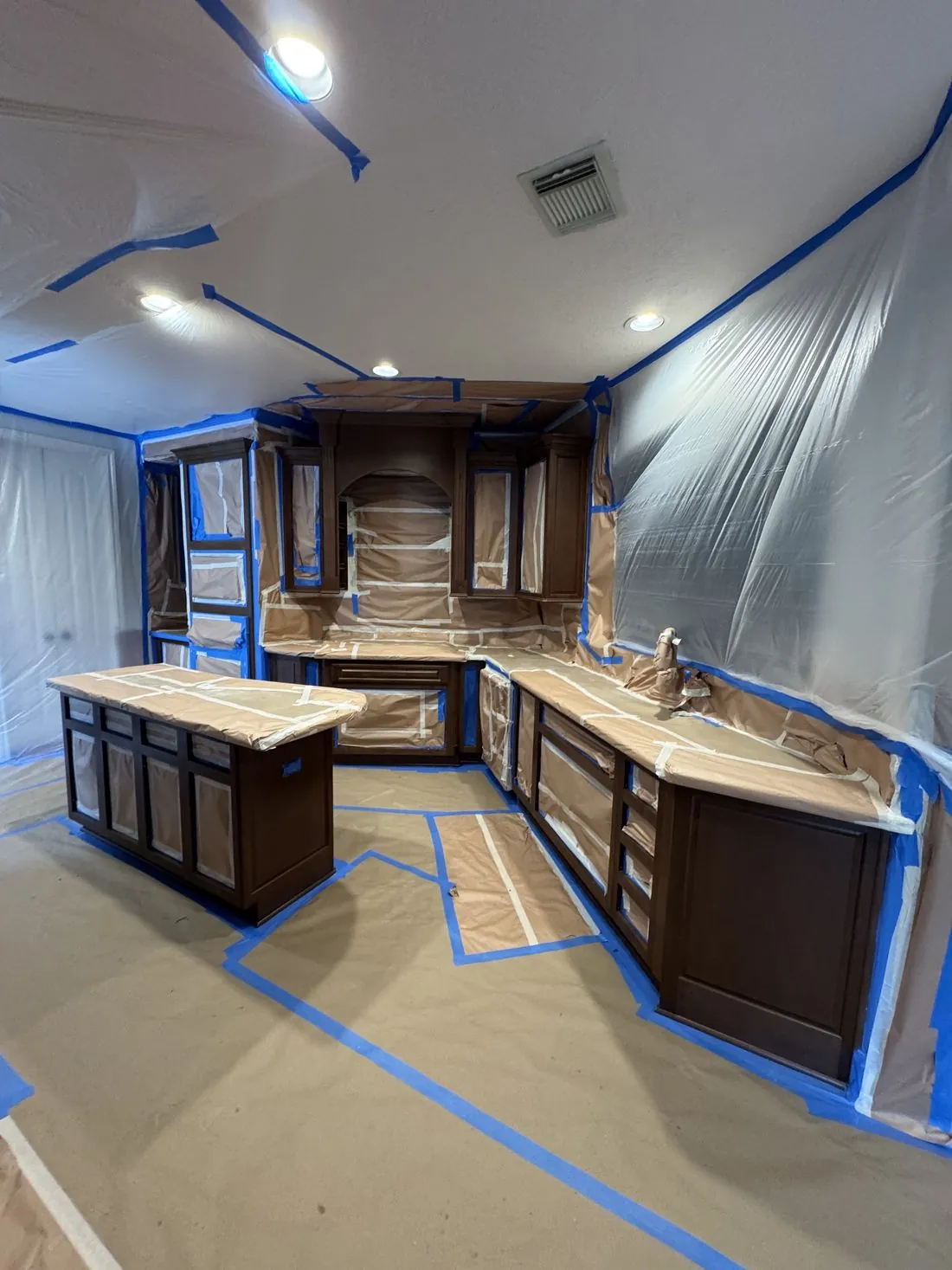
Peeling kitchen cabinets tend to give way in the same few places: beside the range, over the dishwasher, around the handles and along the bottom edges of the sink doors. Before anything is scraped or sanded, find out what’s peeling. A painted door, a thermofoil door and a laminate door each fail in their own way, and they don’t take the same fix.
Why are my kitchen cabinets peeling?
Paint on a kitchen cabinet peels when the film loses its bond with the surface under it. Cabinets take more handling, heat, grease and water than almost any other painted surface in a house, so a weak bond shows up there first. Look for these causes.
- Grease left on the doors. Cooking grease builds up on cabinets whether or not you can see it, and paint won’t bond to it.
- A glossy finish that wasn’t sanded. Factory finishes and old enamel are hard and slick, so new paint has nothing to grip.
- Moisture and steam. Sherwin-Williams says moisture from cooking can push paint off surfaces inside the home, and a leak under the sink does the same from behind.
- The wrong primer, or none. Wood, MDF and old glossy paint each need a primer that suits them.
- Paint made for walls. Cabinet doors are opened, wiped and knocked every day, and they need an enamel made for doors and trim.
- Thick coats, rushed. Heavy coats and short gaps between them leave a soft film that marks and lifts.
Newly painted cabinets that chip or peel within weeks point to the prep or the timing: grease that stayed on, a gloss that wasn’t sanded, or doors rehung and used hard before the paint had time to harden. Paint can feel dry to the touch well before it’s ready for daily knocks.
Peeling on a cabinet that has never been painted is a different story. A factory door with a smooth, plastic-like face may be thermofoil, and a skin lifting away from that door has nothing to do with paint.
Is it paint, thermofoil or laminate?
Look at the edge of the peel before deciding anything. What comes away, and where it starts, tells you which problem you have.
| What you see | What it is | What it means |
|---|---|---|
| Flakes and chips, with wood, primer or an older color underneath | Painted wood or MDF | A paint repair or a refinish |
| One smooth skin lifting or bubbling, often near heat or steam | Thermofoil | Hard to repair without new doors |
| A flat sheet lifting at an edge or a corner | Laminate or wood veneer | A gluing job before any paint |
Thermofoil is a thin vinyl skin formed over an MDF core, which gives a door a smooth face with no grain and no seam where the edge meets the front. When it fails, it tends to bubble or pull away in one piece. Laminate and veneer are glued-on layers too, but they’re flat sheets, so they usually let go along an edge or at a corner where the glue line is exposed.
To check your own doors, open one and look at the edges and the back. Painted wood shows grain through the paint or at a worn corner. Painted MDF has crisp routed edges and no grain anywhere, and thermofoil wraps the front and edges in one continuous skin.
Paint can't hold down a skin that's coming off the door.
Can you fix peeling paint on kitchen cabinets?
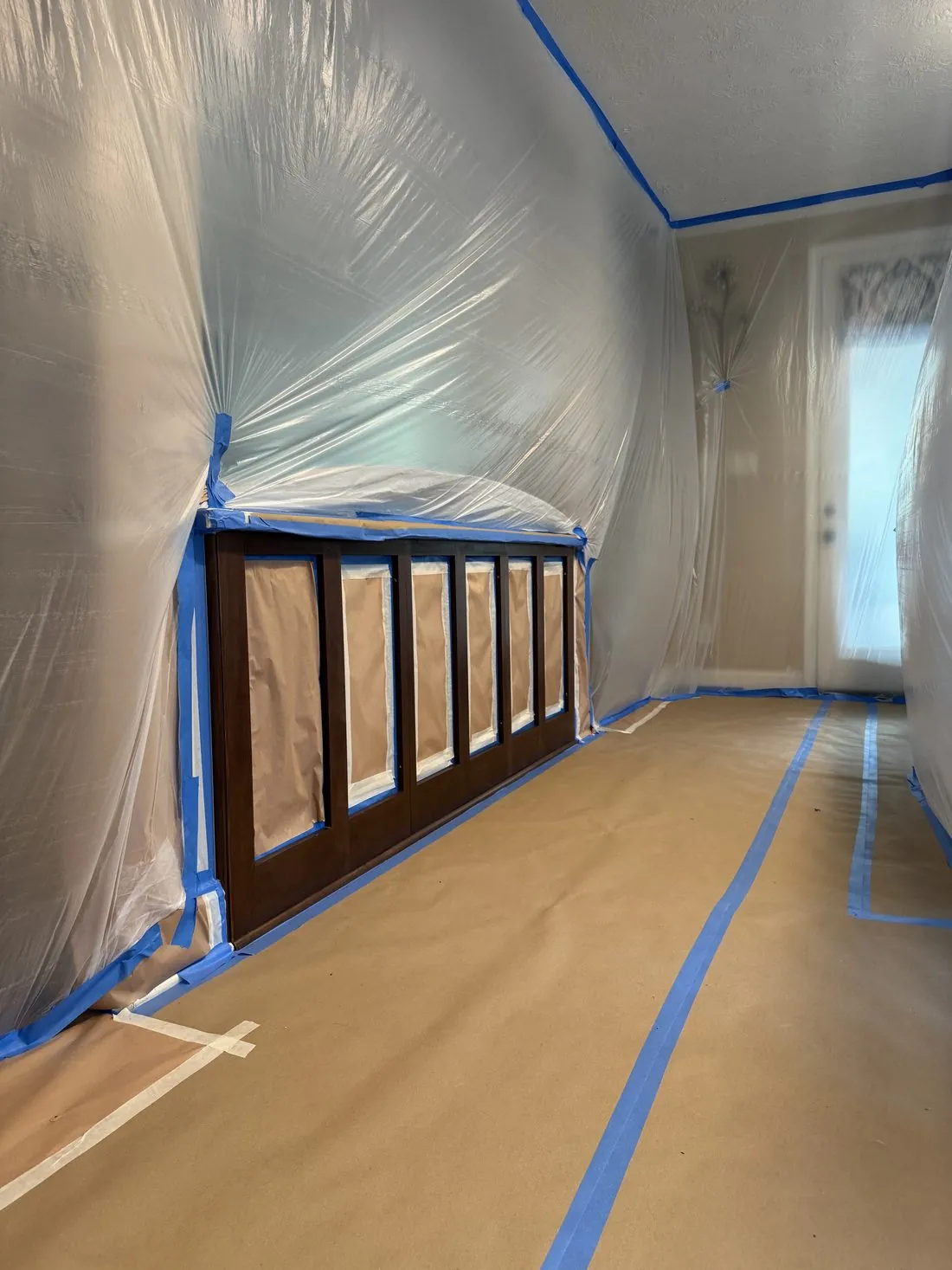
Peeling paint on kitchen cabinets can be fixed, and the size of the job depends on how far the failure reaches. Test that first. Sherwin-Williams suggests checking adhesion in a 6 to 12 inch radius around a failed area, and if the paint lifts there too, spot repairs won’t hold.
For a few small patches on otherwise sound doors, the repair follows these steps.
- Take the door off. Work on it flat, and label each door and its hinges so everything goes back where it came from.
- Degrease it. Clean the whole door, including the parts that look clean.
- Scrape the loose paint. Lift everything that isn’t firmly bonded with a putty knife, taking care not to gouge the wood.
- Feather the edges. Sand the rim of each patch until it slopes into the paint around it, then sand the rest of the door dull.
- Prime the bare spots. Use a primer that suits what’s underneath, whether that’s wood, MDF or old glossy paint.
- Repaint in thin coats. Use a cabinet enamel and give each coat its full recoat time.
When peeling covers several doors, or the paint fails the adhesion test around the damage, spot repairs leave a patchwork, and the doors need a full refinish, with every door and box cleaned, sanded, primed and painted as one job. The same scrape, sand and prime logic holds on walls, and how to fix chipped paint on walls covers it.
A few repainted doors can also stand out beside the rest. Paint shifts with age and light, and even the same color from a new batch can differ slightly, so a kitchen with peeling on half its doors usually looks better refinished as a set.
In a house built before 1978, check before sanding anything. Paint in older homes may contain lead, and the EPA requires paid work that disturbs more than 6 square feet of paint per room inside to be done by a certified firm. Rise and Prime Painting is an EPA Lead-Safe Certified Firm.
Can peeling thermofoil cabinets be painted?
Peeling thermofoil cabinets can’t be fixed with paint, because the vinyl skin is separating from the door and paint would only sit on top of it. Deslaurier, a cabinet manufacturer, says steam can melt, peel or blister thermofoil and high temperatures can make it delaminate, and that peeling thermofoil doors are nearly impossible to repair without replacing them.
Heat and steam explain where it shows up: beside the range, above the dishwasher and under the spot where the kettle or the toaster oven sits.
Some DIY guides strip the vinyl off completely and paint the MDF core underneath. That leaves a bare MDF door, which needs a primer suited to MDF and careful work on the edges before it looks like a painted cabinet. Whether that’s worth doing depends on how many doors have lifted and the condition of the boxes, and it’s a question to settle before the job is priced. When the answer is new doors or new cabinets, painting cabinets vs replacing them compares the options.
What keeps cabinet paint from peeling?
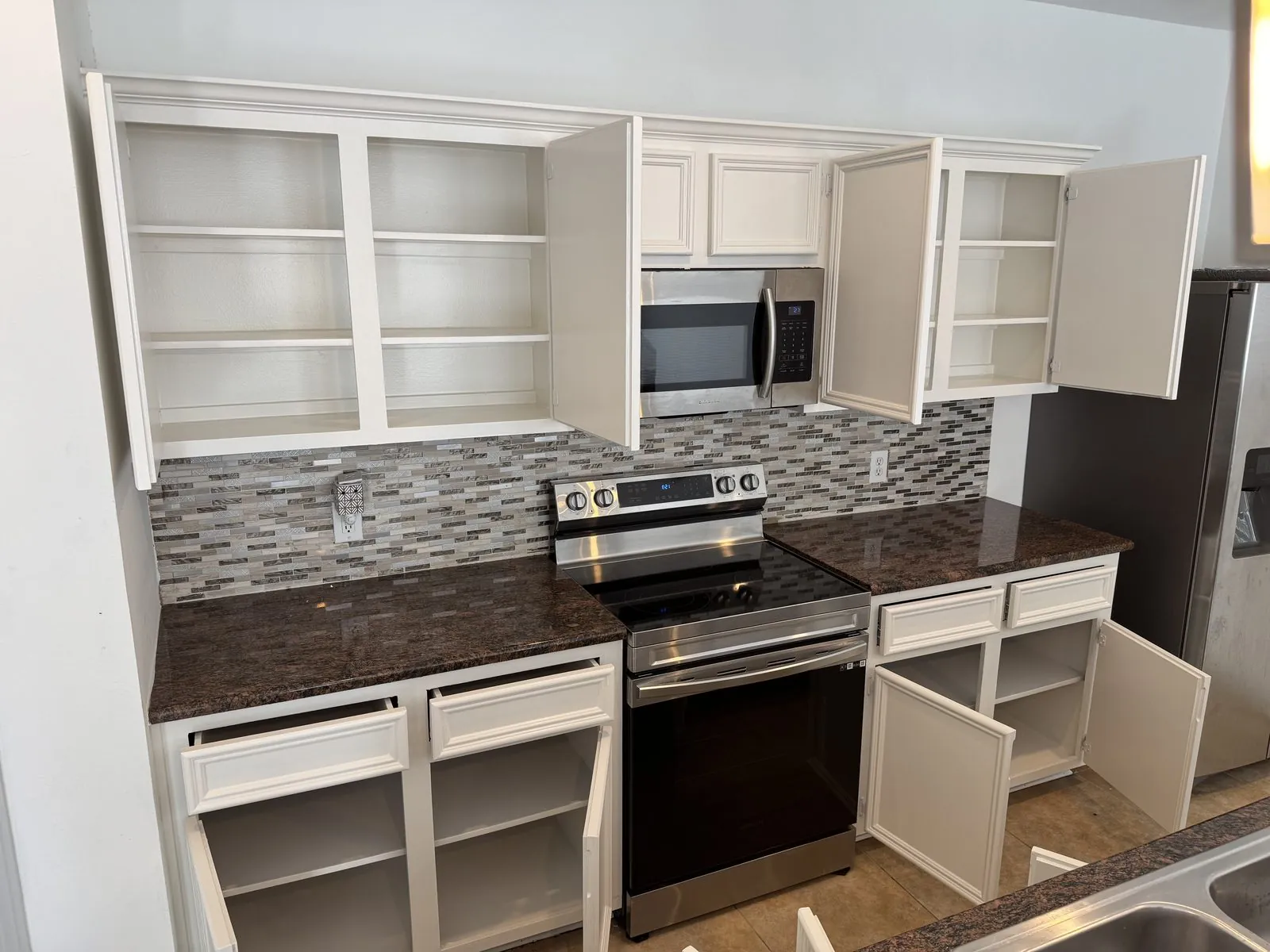
Cabinet paint stays put when every step before the color goes on is done properly. Our cabinet process follows this order.
- Clean and degrease every surface before any sanding.
- Prep and sand the factory finish or old paint, so the primer has something to key into.
- Make repairs to loose doors, worn hinges and damaged edges while the kitchen is masked.
- Prime with a primer suited to the material.
- Sand and detail the primed surfaces smooth.
- Apply the finish coats.
- Reassemble the doors and hardware, fitting soft-close hinges where compatible.
The spraying is done on site with the kitchen contained, and the doors and drawer fronts come off for prep and finishing. Ray’s stated range for a cabinet project is 3 to 5 days, with access to the kitchen limited in periods, and we’ll communicate access and reassembly timing before work begins.
Drying depends on the room as much as the paint. The Sherwin-Williams data sheet for Emerald Urethane Trim Enamel, from the Emerald line Ray works with, lists 1 hour to touch and 4 hours to recoat at 77°F and 50% relative humidity, and says the times depend on temperature, humidity and film thickness. A steamy kitchen on a humid Houston afternoon isn’t sitting at 50%, so each coat’s drying time comes from the conditions in the room.
“they were able to install great quality soft close hinges/stoppers and handles on all drawers/cabinet doors!” Noor Chohan, Google review
What does the 3-Year Workmanship Warranty cover when cabinets peel?
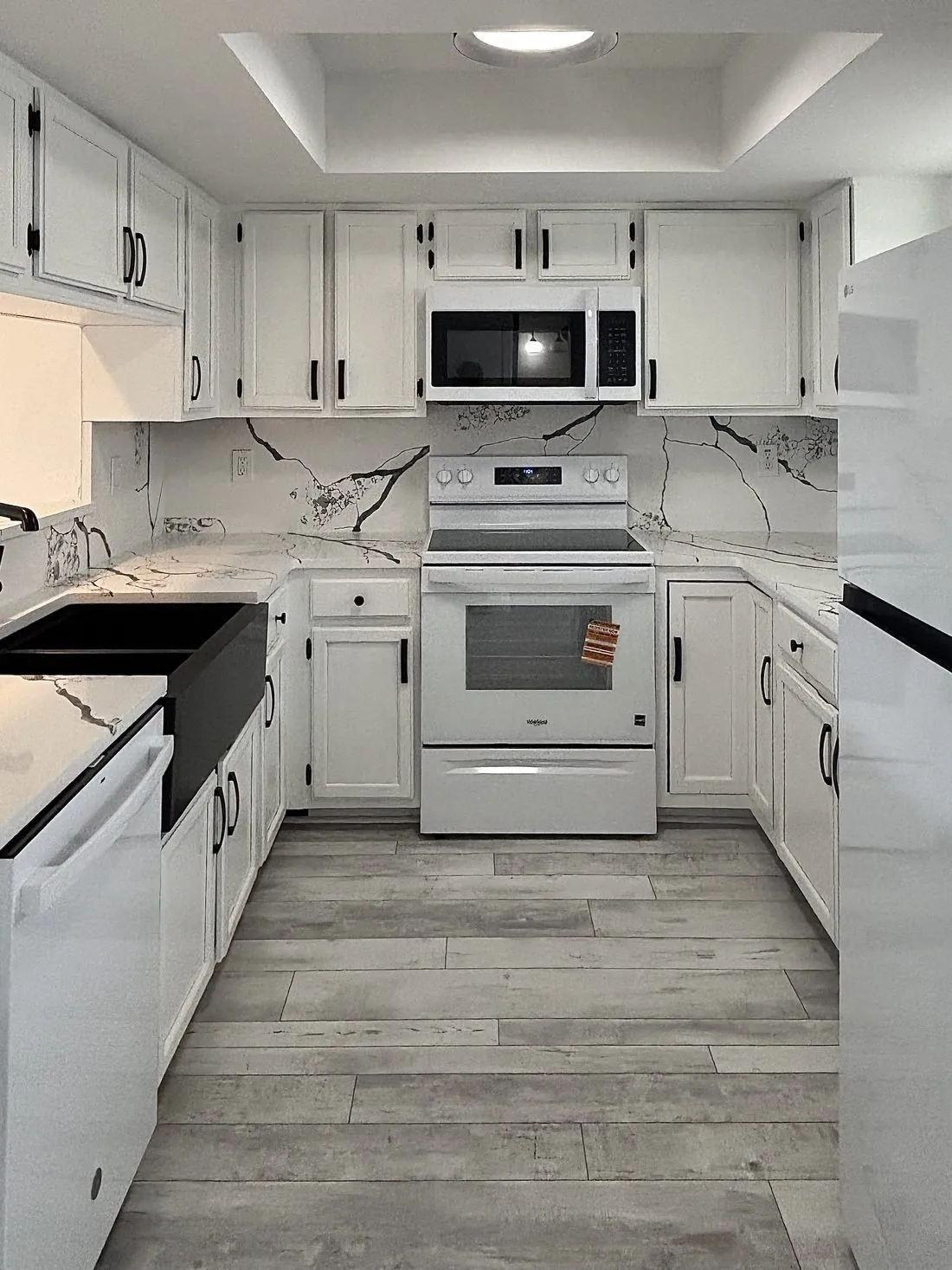
Rise and Prime Painting’s 3-Year Workmanship Warranty covers failures caused by workmanship on surfaces we prepared and painted, which includes premature peeling, blistering or flaking from improper application. The warranty doesn’t cover water intrusion, moisture failures, substrate failure, existing coatings failing underneath, mold or mildew, wear and tear, impact or abuse.
A leak under the sink can lift paint from the inside of a base cabinet, and that’s a moisture failure. Paint that peels at the handles because the doors weren’t degreased and sanded is a workmanship failure. A leak needs a plumber before it needs a painter.
How do you care for painted kitchen cabinets?
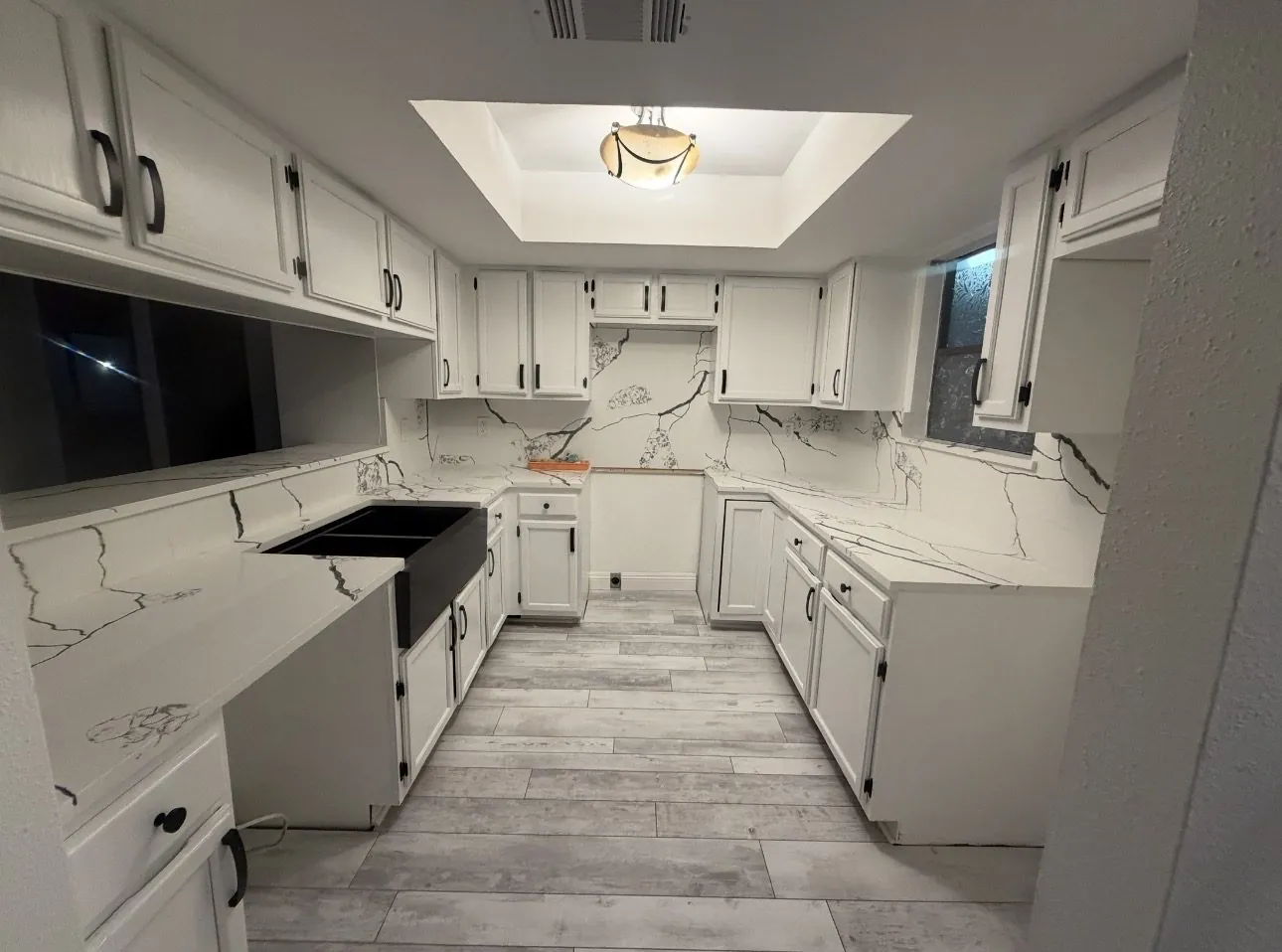
A painted cabinet finish lasts with a few simple habits.
- Clean with mild soap and water, and keep abrasive pads and harsh cleaners away from the doors.
- Wipe up spills and drips before they sit on the finish.
- Turn on the range hood when you cook, so steam doesn’t settle on the doors.
- Fit bumpers to doors and drawers so they close softly.
- Fix a leak under the sink right away, before the water reaches the cabinet base.
- Touch up a chip while it’s small, with paint from the same batch if you have it.
For a kitchen that needs more than care, our cabinet painting in Houston page sets out the full process, the materials and what the job includes, and the painting cost calculator gives a ballpark before anyone visits.